
SHIAC INTERNATIONAL
CASE SERIES
Episode 4
Arbitrating in China under the Rules and Bylaws of the International Cotton Association
01
The problem of conflicts of applicable laws will arise when domestic arbitration institutions deal with cases applying extraterritorial laws. How to respect the choice of law in arbitration cases based on parties' atonomy, especially when the parties agree to apply Chinese laws and extraterritorial laws simultaneously, is the challenge that Chinese arbitration institutions are bound to face. This episode of SHIAC International Case Series is going to introduce a recent case dealt by SHIAC in which the parties agreed to apply the bylaws and rules of the International Cotton Association, and will discuss on the typical questions in this case.
02
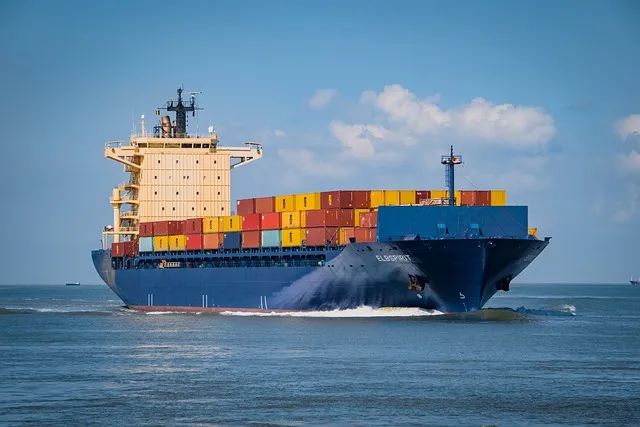
The Claimant, "Company A," is a legal person established in Hong Kong, China, and the Respondent, "Company B," is a Chinese legal person. Both parties signed a sales contract in April 2019, appointing that the Respondent would purchase Mexican cotton from the Claimant, the total price of $1,042575.82, CIF Shanghai, the payment method is an irrevocable letter of credit, the agreed ship in April / May (early). The "Rules" clause in the contract stipulates: "This contract incorporates the bylaws and rules of the International Cotton Association(hereinafter referred to as "ICA") Limited as they were when the contract was agreed." The "Laws" clause in the contract stipulates:" This Contract and any non-contractual obligations arising out of in connection with the contract shall be governed by and construed in accordance with the laws of China." The "Arbitration" clause in the contract stipulates: "The Shanghai International Arbitration Center will resolve all disputes relating to this contract through arbitration in accordance with the bylaws of the International Cotton Association Limited. This Agreement incorporates the bylaws which set out the Association's Arbitration Procedure."
On April 28, 2019, the Respondent opened a letter of credit before the agreed date. On June 17, the first two batches of goods from the Claimant arrived at Shanghai Yangshan Port, but because the Claimant's registration certificate expired, the Claimant failed to go through the import customs clearance procedures. On June 26, the issuing bank refused to pay the letter of credit on the grounds of the inconsistency of the Claimant. Since then, the two parties have often negotiated the customs declaration of the goods. According to the negotiation, the Claimant will put the three batches of goods into storage in July 2019 and complete the commodity inspection on August 9. On September 6, the Claimant obtained the new Registration Certificate of Overseas Supply Enterprises of Imported Cotton and handled the customs clearance procedures for the goods, but both sides have yet to agree on the collection of the goods. The Claimant then issued a notice requiring the Respondent to pay for the goods before September 30, and the Respondent did not pay or pick up the goods, so the Claimant resold the cotton in October.
The Claimant then initiate arbitration with the Shanghai International Arbitration Center based on the dispute. The Claimant believes that the Respondent refuses to perform the receipt and payment obligations under the sales contract, causing losses to the Claimant. Under Article 237 of the ICA Rules (2018 edition), in effect at the time of the contract, the disputed contract shall be terminated on October 1, 2019. Since the price of the underlying cotton on the date of termination is lower than the price agreed in the contract, Under Item 4 of Article238 of the ICA Rules, As the buyer, the Respondent shall pay the Claimant the difference between the contract price and the termination date to settle the price And to compensate the Respondent for the losses of import customs clearance and customs taxes paid on behalf of the Respondent.
The Respondent believes that the premise of applying the bylaws and the rules of the ICA is that the parties choose the international Cotton Association arbitration method and use the bylaws and the rules of the ICA and the English Law to resolve disputes. However, the parties in the contract and arbitration procedures for the ICA of the mandatory provisions and dispute resolution changes, so in fact, the parties have accepted the application of the bylaws and rules of the ICA. At the same time, the Claimant breached this contract first. The settlement rule of Article 238 of the ICA rules conflicts with the principle of damages for breach of contract under Chinese law and should not be applied.
03
After the hearing, the arbitration tribunal concluded that the core of the dispute between the two parties lies in:
1.the application of the bylaws and rules of the ICA in this case,
2.the application of the settlement clauses in the bylaws and the rules of the ICA, and
3.the determination of the liability for breach of contract.
As for the first issue, the arbitration tribunal noted that the parties agreed in the arbitration clause of the sales contract to choose the Shanghai International Arbitration Center and apply the bylaws and the rules of the ICA for arbitration. Although Article 300 of the bylaws and the rules of the ICA(2018 edition) stipulate that, according to the arbitration chapter, the international cotton arbitration shall be applied to the British law in the UK arbitration, the two sides in the arbitration process have reached a written agreement, agreed to change to use the rules of Shanghai international arbitration center for arbitration in Shanghai, while the substantive part of the bylaws and the rules of the ICA continues to be retained. The meaning, as mentioned above expression, was further confirmed by both parties during the trial, reflecting the parties' true agreement. Therefore, the Respondent lacks the meaning that the parties excluded the arbitration procedure from the overall application of the bylaws and the rules of the ICA. The tribunal further held that the parties agreeing to apply the bylaws and the rules of the ICA in the contract "Rules" part can be understood as the parties accepting the entity rules of the ICA Rules as a part of articles in the sales contract. Without violation of the law of the mandatory or prohibitive provisions, the entity rules of the ICA Rules shall be applied in this case.
For the second issue, the arbitration tribunal held that first, the bylaws and the rules of the ICA, including the closing rules and the return invoice rules, are widely adopted by most traders in the international cotton trade, which has constituted the global practice of the international cotton trade. Secondly, the judicial practice of Chinese courts in recognizing and implementing the ICA arbitration award in many cases has proved that the settlement rules do not violate China's public policy, and the effectiveness of the award made according to the rules is also recognized by the judicial organs in China. Third, according to articles 237 and 238 of the Rules of the ICA, the breach of one or both parties does not affect the validity and application of the ICA settlement clause agreed by the parties, which means the application of this rule is not limited by the provisions relating to liability for breach of contract in the Contract Law of China. No matter the agreement of the parties, the Chinese legislative provisions, or China's judicial practice, this rule does not violate China's mandatory legal provisions or public policy. Therefore, the arbitration tribunal held that the settlement clause in the bylaws and rules of the ICA should be applied in this case. Under Article 238 of the Rules of the ICA, the arbitration tribunal determined that the amount of the settlement price shall be the difference between the price agreed in the contract and the market price of cotton or cotton of similar quality on the date of termination, multiplied by the quantity agreed in the sale contract.
For the third issue, the arbitration tribunal held that although the liability for breach of contract does not limit the settlement clause claimed by the Claimant, the provisions of Chinese laws agreed by the two parties should still apply to matters other than the settlement, such as payment of goods and performance of customs declaration obligations. The arbitration tribunal believes that although the Claimant can, under the International Cotton Association rules, claim article 237, it is still in breach of the contract since its Registration certificate as an overseas supplier of imported cotton expired and the Claimant's goods are short shipment. According to Chinese law, the Claimant has no right to hold the Respondent liable for unpaid.
04
This is a typical case involving the application of international commercial transaction rules in arbitration, consisting of the proof of foreign laws and rules in the arbitration procedure, several conflict norms, contract texts, business practices, and general legal principles. The characteristics of commercial arbitration mechanisms, such as expert case determination, autonomy of parties, and flexible procedures, have been fully reflected in this case, and it is a typical case of using arbitration mechanisms to solve international commercial transaction cases.
In this case, the parties chose a set of law applicable norms (British law) and arbitration procedure law (arbitration) to complete international commercial trading rules, but at the same time, agreed on the quasi law (China law) and arbitration institutions (China arbitration institution), involving multiple procedures and physical conflict. It also challenged the arbitration institution, arbitration tribunal accurately conducting arbitration procedure and applying laws. In this case, the starting point for the arbitration institution and the arbitration tribunal to solve the aforementioned conflict is to strictly respect the autonomy of the parties to seek the "greatest common divisor" in procedure and entity, that is, the application of the rules of Chinese arbitration institutions, the entity rules of international transactions and the substantive laws of China. The practice of harmonizing the conflicts between various legal rules based on fully respecting the parties' autonomy is also the basic concept of international arbitration. In this case, the arbitration tribunal finally held that the settlement regulation in the ICA Rules, which is voluntarily chosen by the parties and accepted in the international cotton trade, and the Chinese law should be applied in the performance of other contracts, which also reflects the global thinking and legal wisdom of the Chinese arbitrators.
Of course, on the other hand, the conflict problem stipulated in this case's contract terms also deserves the commercial subject's full attention. When carrying out international economic and trade transactions, Chinese enterprises often encounter the application of global trading rules or foreign laws. Behind these rules and legal texts may contain business rules and practices that Chinese enterprises are unfamiliar with. When drafting such contract terms, Chinese enterprises should know the core provisions in these transaction rules as far as possible and ensure the consistency of the entity provisions in these terms, the laws applicable to the transaction, and the consistency between the provisions concerning the dispute settlement procedures and the dispute settlement provisions of the contract.

关注我们
CASE SERIES
Episode 4
Arbitrating in China under the Rules and Bylaws of the International Cotton Association
01
Case Synopsis
The problem of conflicts of applicable laws will arise when domestic arbitration institutions deal with cases applying extraterritorial laws. How to respect the choice of law in arbitration cases based on parties' atonomy, especially when the parties agree to apply Chinese laws and extraterritorial laws simultaneously, is the challenge that Chinese arbitration institutions are bound to face. This episode of SHIAC International Case Series is going to introduce a recent case dealt by SHIAC in which the parties agreed to apply the bylaws and rules of the International Cotton Association, and will discuss on the typical questions in this case.
02
Basic Facts
The Claimant, "Company A," is a legal person established in Hong Kong, China, and the Respondent, "Company B," is a Chinese legal person. Both parties signed a sales contract in April 2019, appointing that the Respondent would purchase Mexican cotton from the Claimant, the total price of $1,042575.82, CIF Shanghai, the payment method is an irrevocable letter of credit, the agreed ship in April / May (early). The "Rules" clause in the contract stipulates: "This contract incorporates the bylaws and rules of the International Cotton Association(hereinafter referred to as "ICA") Limited as they were when the contract was agreed." The "Laws" clause in the contract stipulates:" This Contract and any non-contractual obligations arising out of in connection with the contract shall be governed by and construed in accordance with the laws of China." The "Arbitration" clause in the contract stipulates: "The Shanghai International Arbitration Center will resolve all disputes relating to this contract through arbitration in accordance with the bylaws of the International Cotton Association Limited. This Agreement incorporates the bylaws which set out the Association's Arbitration Procedure."
On April 28, 2019, the Respondent opened a letter of credit before the agreed date. On June 17, the first two batches of goods from the Claimant arrived at Shanghai Yangshan Port, but because the Claimant's registration certificate expired, the Claimant failed to go through the import customs clearance procedures. On June 26, the issuing bank refused to pay the letter of credit on the grounds of the inconsistency of the Claimant. Since then, the two parties have often negotiated the customs declaration of the goods. According to the negotiation, the Claimant will put the three batches of goods into storage in July 2019 and complete the commodity inspection on August 9. On September 6, the Claimant obtained the new Registration Certificate of Overseas Supply Enterprises of Imported Cotton and handled the customs clearance procedures for the goods, but both sides have yet to agree on the collection of the goods. The Claimant then issued a notice requiring the Respondent to pay for the goods before September 30, and the Respondent did not pay or pick up the goods, so the Claimant resold the cotton in October.
The Claimant then initiate arbitration with the Shanghai International Arbitration Center based on the dispute. The Claimant believes that the Respondent refuses to perform the receipt and payment obligations under the sales contract, causing losses to the Claimant. Under Article 237 of the ICA Rules (2018 edition), in effect at the time of the contract, the disputed contract shall be terminated on October 1, 2019. Since the price of the underlying cotton on the date of termination is lower than the price agreed in the contract, Under Item 4 of Article238 of the ICA Rules, As the buyer, the Respondent shall pay the Claimant the difference between the contract price and the termination date to settle the price And to compensate the Respondent for the losses of import customs clearance and customs taxes paid on behalf of the Respondent.
The Respondent believes that the premise of applying the bylaws and the rules of the ICA is that the parties choose the international Cotton Association arbitration method and use the bylaws and the rules of the ICA and the English Law to resolve disputes. However, the parties in the contract and arbitration procedures for the ICA of the mandatory provisions and dispute resolution changes, so in fact, the parties have accepted the application of the bylaws and rules of the ICA. At the same time, the Claimant breached this contract first. The settlement rule of Article 238 of the ICA rules conflicts with the principle of damages for breach of contract under Chinese law and should not be applied.
03
Issues and Opinions
After the hearing, the arbitration tribunal concluded that the core of the dispute between the two parties lies in:
1.the application of the bylaws and rules of the ICA in this case,
2.the application of the settlement clauses in the bylaws and the rules of the ICA, and
3.the determination of the liability for breach of contract.
As for the first issue, the arbitration tribunal noted that the parties agreed in the arbitration clause of the sales contract to choose the Shanghai International Arbitration Center and apply the bylaws and the rules of the ICA for arbitration. Although Article 300 of the bylaws and the rules of the ICA(2018 edition) stipulate that, according to the arbitration chapter, the international cotton arbitration shall be applied to the British law in the UK arbitration, the two sides in the arbitration process have reached a written agreement, agreed to change to use the rules of Shanghai international arbitration center for arbitration in Shanghai, while the substantive part of the bylaws and the rules of the ICA continues to be retained. The meaning, as mentioned above expression, was further confirmed by both parties during the trial, reflecting the parties' true agreement. Therefore, the Respondent lacks the meaning that the parties excluded the arbitration procedure from the overall application of the bylaws and the rules of the ICA. The tribunal further held that the parties agreeing to apply the bylaws and the rules of the ICA in the contract "Rules" part can be understood as the parties accepting the entity rules of the ICA Rules as a part of articles in the sales contract. Without violation of the law of the mandatory or prohibitive provisions, the entity rules of the ICA Rules shall be applied in this case.
For the second issue, the arbitration tribunal held that first, the bylaws and the rules of the ICA, including the closing rules and the return invoice rules, are widely adopted by most traders in the international cotton trade, which has constituted the global practice of the international cotton trade. Secondly, the judicial practice of Chinese courts in recognizing and implementing the ICA arbitration award in many cases has proved that the settlement rules do not violate China's public policy, and the effectiveness of the award made according to the rules is also recognized by the judicial organs in China. Third, according to articles 237 and 238 of the Rules of the ICA, the breach of one or both parties does not affect the validity and application of the ICA settlement clause agreed by the parties, which means the application of this rule is not limited by the provisions relating to liability for breach of contract in the Contract Law of China. No matter the agreement of the parties, the Chinese legislative provisions, or China's judicial practice, this rule does not violate China's mandatory legal provisions or public policy. Therefore, the arbitration tribunal held that the settlement clause in the bylaws and rules of the ICA should be applied in this case. Under Article 238 of the Rules of the ICA, the arbitration tribunal determined that the amount of the settlement price shall be the difference between the price agreed in the contract and the market price of cotton or cotton of similar quality on the date of termination, multiplied by the quantity agreed in the sale contract.
For the third issue, the arbitration tribunal held that although the liability for breach of contract does not limit the settlement clause claimed by the Claimant, the provisions of Chinese laws agreed by the two parties should still apply to matters other than the settlement, such as payment of goods and performance of customs declaration obligations. The arbitration tribunal believes that although the Claimant can, under the International Cotton Association rules, claim article 237, it is still in breach of the contract since its Registration certificate as an overseas supplier of imported cotton expired and the Claimant's goods are short shipment. According to Chinese law, the Claimant has no right to hold the Respondent liable for unpaid.
04
Brief Comments
This is a typical case involving the application of international commercial transaction rules in arbitration, consisting of the proof of foreign laws and rules in the arbitration procedure, several conflict norms, contract texts, business practices, and general legal principles. The characteristics of commercial arbitration mechanisms, such as expert case determination, autonomy of parties, and flexible procedures, have been fully reflected in this case, and it is a typical case of using arbitration mechanisms to solve international commercial transaction cases.
In this case, the parties chose a set of law applicable norms (British law) and arbitration procedure law (arbitration) to complete international commercial trading rules, but at the same time, agreed on the quasi law (China law) and arbitration institutions (China arbitration institution), involving multiple procedures and physical conflict. It also challenged the arbitration institution, arbitration tribunal accurately conducting arbitration procedure and applying laws. In this case, the starting point for the arbitration institution and the arbitration tribunal to solve the aforementioned conflict is to strictly respect the autonomy of the parties to seek the "greatest common divisor" in procedure and entity, that is, the application of the rules of Chinese arbitration institutions, the entity rules of international transactions and the substantive laws of China. The practice of harmonizing the conflicts between various legal rules based on fully respecting the parties' autonomy is also the basic concept of international arbitration. In this case, the arbitration tribunal finally held that the settlement regulation in the ICA Rules, which is voluntarily chosen by the parties and accepted in the international cotton trade, and the Chinese law should be applied in the performance of other contracts, which also reflects the global thinking and legal wisdom of the Chinese arbitrators.
Of course, on the other hand, the conflict problem stipulated in this case's contract terms also deserves the commercial subject's full attention. When carrying out international economic and trade transactions, Chinese enterprises often encounter the application of global trading rules or foreign laws. Behind these rules and legal texts may contain business rules and practices that Chinese enterprises are unfamiliar with. When drafting such contract terms, Chinese enterprises should know the core provisions in these transaction rules as far as possible and ensure the consistency of the entity provisions in these terms, the laws applicable to the transaction, and the consistency between the provisions concerning the dispute settlement procedures and the dispute settlement provisions of the contract.
(Editor: Research Department of SHIAC)
关注我们
示范仲裁条款
Model Arbitration Clause
凡因本合同引起的或与本合同有关的任何争议,均应提交上海国际经济贸易仲裁委员会/上海国际仲裁中心进行仲裁。
Any dispute arising from or in connection with this Contract shall be submitted to Shanghai International Economic and Trade Arbitration Commission / Shanghai International Arbitration Center for arbitration.