


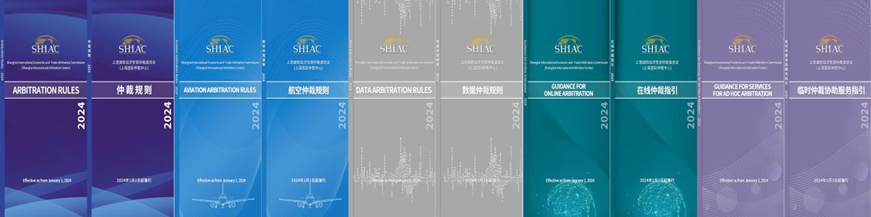
On November 7, 2023, the Shanghai International Economic and Trade Arbitration Commission (Shanghai International Arbitration Center, “SHIAC”) officially introduced its brand-new version of arbitration rules, which will take effects on January 1, 2024. The new arbitration rules of SHIAC is a combination of multiple instruments, comprising the SHIAC Arbitration Rules (2024), the SHIAC Special Arbitration Rules for Aviation, the SHIAC Special Arbitration Rules for Data, and two instruments of SHIAC Guidance respectively for the online arbitration and the services for arbitration applying ad hoc rules. The new SHIAC Arbitration Rules (2024) will replace the institution’s current effective rules which were made in 2015. The update of rules is a gesture in need when the Chinese arbitration market is on rapid growth, reaching an annual growth of 14.3% and 14.7% in the number of arbitration cases and amounts in dispute in 2022. Upon releasing, the SHIAC Arbitration Rules (2024) have received countless praise by the Chinese arbitration community, been described as another milestone in a decade of SHIAC’s rule-making expertise since the institution’s introduction of China’s first set of Free Trade Zone Arbitration Rules in 2014, by then representing the highest level of internationalization of arbitration rules among the current 277 Chinese institutions. The SHIAC Arbitration Rules (2024) are formulated from the users’ perspective and infused with the quintessence of SHIAC’s effective administration of domestic and international arbitration, representing a re-balance among the principle of party autonomy, the arbitrators’ procedural management power and the needed safeguard and support from the institution throughout the lifespan of an arbitration.
I. Background of Updating the SHIAC Arbitration Rules
The current SHIAC Arbitration Rules consist of the Shanghai International Economic and Trade Arbitration Commission (Shanghai International Arbitration Center) Arbitration Rules and the China (Shanghai) Pilot Free Trade Zone Arbitration Rules, both became effective on January 1, 2015. In the following years since 2015, with the evolution of the global economy, the world turned their eyes to the east for new opportunities, including for the international arbitration that have exported their best practices to the untested land. On one hand, the accelerated inclusion of information technology in arbitration and the birth of new codes of conduct brought the best practices and the local practices to the point of convergence. As a leading arbitration institution in China, SHIAC stayed close to the forefront of practice and commenced the amendment of its 2015 version of arbitration rules in November 2021. On the other hand, earlier in July 2021, the Ministry of Justices of P.R.C. made open its draft amendment to the Chinese Arbitration Law (1994), thus the Chinese institutions were called upon to reconfigure their existing rules. On the policy level, the central government of P.R.C. announced in May 2022 the pilot project of building Beijing, Shanghai, Guangzhou, Shenzhen and Hai’nan into international commercial arbitration hubs. In September 2023, the Shanghai legislative organ sought public consultation on their draft legislature on fostering Shanghai as an international commercial arbitration center. Against these backgrounds and through multiple rounds of professional forge, SHIAC ultimately ushers in the high time of releasing the SHIAC Arbitration Rules (2024).
The SHIAC Arbitration Rules (2024) contains the collective wisdom of 27 experts coming from prominent law firms, big corporations and experienced judges of commercial courts, who all provided consultation on the draft rules. Special tributes should also be paid to the distinguished Professor Ding Wei, the vice-Chairman of SHIAC and former director of the Shanghai legislative organ, for leading the task force on the amendment of the rules.
II. Structure of the SHIAC Arbitration Rules (2024)
In recent years, it has been the practice of major international arbitration institutions to formulate special arbitration rules according to the needs of their own business development, and to elaborate specific arbitration proceedings in the form of procedural guidelines. Taking this as a reference, the new SHIAC arbitration rules is designed as a group of instruments that include the SHIAC Arbitration Rules (2024), the SHIAC Special Arbitration Rules for Aviation, the SHIAC Special Arbitration Rules for Data, the SHIAC Guidance for Online Arbitration and the SHIAC Guidance for Services for Ad Hoc Arbitration.
In order to further strengthen the capacity of SHIAC and assist the Chinese companies going global with more accessible arbitration services, the SHIAC Arbitration Rules (2024) mandates in Article 2 that SHIAC establishes its first over-seas branch, i.e. the Shanghai International Arbitration (Hong Kong) Center. Accordingly, the Chapter 9 of SHIAC Arbitration Rules (2024) is dedicated to regulate the arbitration procedures in SHIAC’s new center in Hong Kong. At the same time, the SHIAC Arbitration Rules (2024) specifically amended the arbitration fee schedules, including to have clarified the fee cap and the installing method of making the advancement.
All in all, the multi-level and three-dimensional group of instruments that will take effects on January 1, 2024 will expand the breadth, width and depth of the application of these rules and offer a more preferable menu to the users of SHIAC arbitration services.
III. Major Changes in the SHIAC Arbitration Rules (2024)
In summary, 15 major changes across the provisions on the parties, the arbitrators and the institutions have been made in the SHIAC Arbitration Rules (2024). Besides, an obvious change in the SHIAC Arbitration Rules (2024) is the increased length filled with 92 articles throughout 10 chapters, while there were only 64 articles in the 2015 version of rules.
Part.01
Further enriching the parties’ procedural options
The development of international arbitration in recent years has been driven by the formulation of arbitration rules and the provision of dispute resolution services at the center of the parties. In addition to the traditional demands of the parties for international arbitration, such as fairness, professionalism and convenience, "green", "smart", "pluralistic", "economical", "transparent" and "predictable" are becoming the new development concepts of international arbitration. The new version of the SHIAC Arbitration Rules (2024) responds to these new development concepts in a number of ways:
1
Enriching the options for consolidated arbitration
For reasons of efficiency or strategy, the parties have shown strong demands for the resolution of disputes between multiple parties in a single case. At the beginning of the procedure, it is manifested as "multiple contracts are consolidated for one arbitration", and in the course of the case, it is manifested as "consolidated arbitration". In this regard, Article 15 of the SHIAC Arbitration Rules (2024) adds a provision on the consolidation of multiple contracts to one arbitration, allowing the parties to initiate an arbitration on the consolidation of disputes arising from the same transaction or the same series of transactions, or the existence of related contractual relationship, or the subject matter of arbitration is of the same type, subject to certain conditions. At the same time, Article 40 provides for the consolidation of arbitrations, making it clear that if the subject matter of multiple arbitration is of the same type or related, the arbitral tribunal may decide to directly consolidate the cases into one case.
02
Improving the system for third parties to be joined
Article 41 of the SHIAC Arbitration Rules (2024) integrates the “joinder of third parties” and “joinder of other parties to the arbitration agreement” that were written in the FTZ Arbitration Rules and standardizes the constitution of arbitral tribunals in such circumstances. In order to effectively balance the procedural autonomy of the parties and the control of the arbitral tribunal over the efficiency of the arbitration, the SHIAC Arbitration Rules (2024) also responds to the changes in the constitution of the arbitral tribunal that may arise due to the joinder of third parties and distinguishes between the situations of "joining before the constitution of the tribunal" and "joining after the constitution of the tribunal", and accordingly makes different procedural designs. Paragraph (3) of Article 41 of the SHIAC Arbitration Rules (2024) provides that after the Secretariat agrees to the joinder of third parties in the arbitration proceedings, if the multiple claimants or the respondents cannot jointly select the co-arbitrator, all the arbitrators in the case shall be appointed by the chairman of SHIAC, unless the parties have otherwise agreed on the constitution of the arbitral tribunal. Paragraph (4) of Article 41 provides that if the joined third parties and the original parties fail to reach an agreement on the constitution of the arbitral tribunal after the arbitral tribunal has been constituted, the arbitral tribunal has the right to disagree with the joinder of third parties in the arbitral proceedings.
03
Providing interim measures and emergency arbitrator relief
The new version of the SHIAC Arbitration Rules (2024) incorporates the "interim measures" in the FTZ Arbitration Rules, and further optimizes the "Emergency Arbitrator Procedure", highlighting the urgency and efficiency of the "Emergency Arbitrator Procedure". Paragraph 2 of Article 25 of the SHIAC Arbitration Rules (2024) shortens the time for the Chairman of SHIAC to appoint an emergency arbitrator from 3 days to 2 days. Article 26 further shortens the time limit for an emergency arbitrator to make a decision, in which Paragraph (3) distinguishes that the time limit for the emergency arbitrator to make a decision on interim measures is 10 days for "unsecured" cases, and 5 days for "secured" cases. At the same time, the SHIAC Arbitration Rules (2024) continues the "pre-arbitration interim measures" of the FTZ Arbitration Rules, and shortens the time limit to two days for SHIAC to forward an application for pre-arbitration interim measures to a court of competent jurisdiction.
04
Further opening up the methods for selecting arbitrators
In terms of the diversification of the constitution of the arbitral tribunal, Article 30 of the SHIAC Arbitration Rules (2024) allows the parties to independently agree on the constitution of the arbitral tribunal without violating the mandatory provisions of the law applicable to the arbitration proceedings; Article 31 expands the scope of arbitrators from outside the panel that the parties may recommend to all members of the arbitral tribunal; Article 32 allows the parties to agree that the presiding arbitrator shall be jointly appointed by the two co-arbitrators, and allows the parties to apply to SHIAC to use the "recommended short list" method to determine the presiding arbitrator. From the perspective of the parties' demand for the selection of arbitrators in arbitration practice, the parties hope that the arbitration rules can enrich the path for them to participate in the proceedings of the constitution of the tribunal and protect their procedural rights to select arbitrators in multiple dimensions. The SHIAC Arbitration Rules (2024) effectively responds to the needs of the parties in the selection of arbitrators, and reflects the full attention and protection of the parties in exercising the core procedural right to select arbitrators.
05
Smooth online arbitration of the whole cycle
According to the 2021 International Arbitration Survey, the highest-ranked option for parties to expect from an arbitration institution is "administrative/logistical support for virtual hearings". Articles 10 and 39(2) of the SHIAC Arbitration Rules (2024) stipulate that the parties may negotiate and agree that all or part of the arbitration proceedings shall be conducted online through the SHIAC E-Platform or other Internet or private networks, and stipulate that the principles of technological neutrality, efficiency and convenience, equality of rights, safety and reliability shall be followed when using digital intelligence technology. At the same time, Article 9 of the SHIAC Arbitration Rules (2024) establishes the principle of encouraging green arbitration, and stipulates that parties may give priority to electronic submission of materials in Article 20 and Article 85 also stipulates that documents and materials may be served electronically.
Part.02
Further strengthening the procedural control of the arbitral tribunal
"A good arbitrator makes a good arbitration". Whether more "good" arbitrators can participate in the hearing of arbitration cases, and whether they can create a good environment for these "good" arbitrators to hear cases, is an important reflection of whether the arbitration rules are well designed or not. The SHIAC Arbitration Rules (2024) provides a clear response to the strengthening of the procedural powers of the arbitral tribunal:
01
The arbitral tribunal has the power to regulate dishonest arbitration
Arbitration in good faith is a basic requirement. Article 8 of the SHIAC Arbitration Rules (2024) clearly stipulates that the parties shall participate in arbitration following the principles of good faith and conduct the procedures with goodwill and cooperation. At the same time, the SHIAC Arbitration Rules (2024) gives the arbitral tribunal the power to regulate dishonest arbitration. In the case of the situation where the parties deliberately change their representatives or create a conflict of interest between the representative and the arbitrator after being notified of the constitution of the arbitral tribunal, Article 21(3) of the SHIAC Arbitration Rules (2024) provides that the parties shall submit a written application to the arbitral tribunal for a change of representation, and the arbitral tribunal shall have the discretion to decide whether to allow the parties to change or add a representative to participate in the arbitration proceedings; In the event that a party requests to withdraw its application for arbitration after the conclusion of the arbitration procedures in order to avoid an adverse award, Article 52(3) of the SHIAC Arbitration Rules (2024) allows the arbitral tribunal to refuse to agree to withdraw and continue the arbitration proceedings, or to allow the opposing party to file a counterclaim for the arbitration costs already incurred if the withdrawal is agreed; In the event that the parties submit their documents, applications, evidentiary materials late or deliberately delay the proceeding of the case, Article 63(4) of the SHIAC Arbitration Rules (2024) allows the arbitral tribunal to punish the party at fault when allocating the arbitration costs.
02
The Arbitral Tribunal shall have the right to declare the procedures concluded
In practice, whether the arbitral tribunal can still accept the parties' legal opinions or supplementary evidence after the hearing is an issue that involves questions such as "when to close the door of evidence" and "when to close the door of procedure". In order to encourage the arbitral tribunal to improve the quality and efficiency of the hearing, Article 51 of the SHIAC Arbitration Rules (2024) provides that the arbitral tribunal may determine the deadline for the parties to submit the arbitration documents and evidence materials in the arbitration proceedings, and decide to conclude the procedure after such time limit, and after that no longer accept any document submitted by the parties; In the event of exceptional circumstances, the arbitral tribunal may, at any time before the award is rendered, decide to resume the proceedings at the request of the parties or if the arbitral tribunal deems it necessary.
03
The arbitral tribunal shall have the power to make procedural decisions
Article 6 of the SHIAC Arbitration Rules (2024) clearly stipulates the principle of "competence-competence", that is, after the arbitral tribunal is constituted, SHIAC authorizes the arbitral tribunal to make a jurisdictional decision, and the jurisdictional decision made by SHIAC on the basis of prima facie evidence shall not prevent the arbitral tribunal from making a new decision based on facts or evidence found in the course of hearing which makes their decision inconsistent with decision founded on the prima facie evidence. At the same time, Article 6 also provides that the arbitral tribunal may make a determination on the existence of a written arbitration agreement between the parties if there are circumstances such as the parties take the initiative to participate in the arbitration proceedings. Article 39 of the SHIAC Arbitration Rules (2024) provides that the arbitral tribunal may decide to hold the hearing in whole or in part online through the Internet, or may issue procedural instructions, issue a list of issues, hold a pre-hearing conference, convene a preliminary hearing, prepare a statement of the scope of hearing, make an interim award or a partial award, etc., and may also make arrangements for the exchange and verification of evidentiary materials, witness testimonies, post-hearing submissions, etc.
04
The arbitral tribunal shall have the power to determine the rules of evidence
The rules of evidence are the methodology by which the arbitral tribunal ascertains the facts of a case. International practice shows that the rules of evidence in arbitration do not necessarily follow the rules of evidence in litigation; especially in the hearing of foreign-related arbitration cases, the cross-jurisdictional nature of the case makes it difficult for a single set of evidence rules of a fixed paradigm to meet the needs of the individual case, and may also be inconsistent with the expectations of the parties in the arbitration agreement for the processing of evidence. Therefore, on the one hand, the rules of evidence in arbitration should give the parties the right to determine the rules of evidence independently, and on the other hand, in the absence of agreement between the parties, they should also empower the arbitral tribunal to determine the rules of evidence in the arbitral proceedings according to the circumstances of the case. Judging from past practice, arbitral tribunals have obvious practical needs for the right to decide on the rules of evidence in the hearing of foreign-related intellectual property disputes. Therefore, Article 46(5) of the SHIAC Arbitration Rules (2024) provides that the form of evidence submitted by the parties and the matters related to the submission of evidence shall be in accordance with the rules of evidence applicable to the case; If the parties have not agreed on the rules of evidence or the agreement cannot be enforced, the arbitral tribunal may make a decision with reference to the relevant provisions applicable to the law in the arbitration proceedings.
05
The arbitral tribunal shall have the power to determine the applicable law
In the course of hearing foreign-related cases, the application of law is the first issue to be resolved by the arbitral tribunal, and it is a common concept in international arbitration to give the arbitral tribunal the right to decide on the application of law. Article 59 of the SHIAC Arbitration Rules (2024) specifically provides for the ascertainment and application of law in foreign-related cases, that is, in cases with foreign-related elements, if the parties have not agreed on the application of law, the arbitral tribunal has the right to determine the law and rules applicable to the arbitration agreement and the substantive dispute. At the same time, the arbitral tribunal may decide on the method of ascertaining foreign laws and rules, including adopting the examined legal opinions of witness(es) retained by the parties; Where the parties agree on the arbitration agreement or submit a request in writing through consensus during the arbitration proceedings, the tribunal may render an award solely based on the principle of fairness and reasonableness, provided that it does not violate the mandatory provisions of the law of the seat of arbitration.
Part.03
Further clarifying the institution’s procedural administration
As the parties' requirements for arbitration services become more and more sophisticated, "institutional arbitration" by professional institutions providing specialized case management services has become the mainstream of international arbitration, and the core of institutional management of cases is how to balance the relationship between party autonomy and the fairness and efficiency of arbitration procedures, and how to coordinate between the parties and the arbitrators. Based on the above considerations, the SHIAC Arbitration Rules (2024) has made the following innovative attempts to strengthen the case management function of the institution:
01
Strengthening the obligation of disclosure
Article 35 of the SHIAC Arbitration Rules (2024) improves the disclosure of arbitrators, stipulates the obligation of arbitrators to disclose information from the acceptance of the appointment to the conclusion of arbitration proceedings. The obligation of disclosure expands to cover the emergency arbitrators and mediators. The IBA Guidelines on Conflicts of Interest in International Arbitration can be used as a reference for disclosure of arbitrators and the disclosure of third-party funding for arbitration. In addition, considering that the independence and impartiality of experts and appraisers in the arbitration process is also an important aspect affecting the procedural rights of the parties, Article 48(4) of the SHIAC Arbitration Rules (2024) provides that the expert or appraiser shall also disclose in writing the circumstances that may give rise to doubts about his or her independence and impartiality before accepting the selection or appointment. At the same time, in order to prevent the parties from abusing the right, Article 36(5) of the SHIAC Arbitration Rules (2024) provides that, after being informed of the constitution of the tribunal, if a matter arises between a party and an arbitrator that the arbitrator should have disclosed as a result of the party's conduct, that party is deemed to have waived its right to challenge the arbitrator on the same grounds.
02
Improving the efficiency of arbitration procedures
The improvement of the efficiency of arbitration procedures is a practical requirement faced by domestic and foreign arbitration institutions, and it is also an inevitable requirement to maintain the legitimacy of arbitration. The SHIAC Arbitration Rules (2024) optimizes the arbitration process and unifies the procedural time limits for foreign-related cases and non-foreign-related cases except for the time limit for rendering awards. For example, the time limit for submitting the defense, presenting the evidences and applying for counterclaims is no longer distinguished between foreign-related cases and domestic cases. The SHIAC Arbitration Rules (2024) also merges the original summary procedures and the small claims procedures under the FTZ Arbitration Rules into the new Summary Procedures, clarifying that the threshold for the application of the Summary Procedures is RMB 5 million yuan or, if the parties agree to apply the Summary Procedures. The time limit for submitting defense, presenting evidences and filing counterclaims under the Summary Procedures is uniformly set at 15 days, so as to further reflect the effect of simplifying and speeding up the procedures.
03
Optimizing the service of documents
Article 85 of the SHIAC Arbitration Rules (2024) provides specific and operable service of documents procedures. Article 85 has a total of seven paragraphs, which makes clear provisions on the subject to perform the service of documents, the method of service, the rules for service by mail, the rules for electronic service, the change of service address, the time of service, and the handling of objections to service by the parties. In particular, Article 85(7) provides that if a party objects on the ground that it has not received the arbitration documents or notice, it shall state the reasonable reasons for not receiving the documents.
04
Increasing the transparency of arbitration
The SHIAC Arbitration Rules (2024) responds to the concerns on transparency in international arbitration and responds to the principle of confidentiality of arbitration. For example, in past practice, SHIAC has provided parties with a channel to observe the business practices of SHIAC up close by publishing annual reports and summaries of awards. Paragraph 4 of Article 11 of the SHIAC Arbitration Rules (2024) provides that SHIAC may, with the written consent of the parties, publish the redacted award. At the same time, the SHIAC Arbitration Rules (2024) also deleted the former provision that the chairman of the SHIAC may not explain the reasons for the decision on the challenge of arbitrators.
05
Upgrading mediation services
The SHIAC Arbitration Rules (2024) incorporates the mediation procedures prescribed in the FTZ Arbitration Rules, and covers the mediation before the constitution of the arbitral tribunal to all types of cases without increasing the costs of the parties. The mediator will no longer be a member of the arbitral tribunal in the same case, which will effectively increase the willingness of the parties to mediate. At the same time, in order to facilitate the parties to enforce the settlement agreement in the country where the Convention on International Settlement Agreements Resulting from Mediation comes into force in the future, paragraph (6) of Article 54 of the SHIAC Arbitration Rules (2024) adds a provision that the parties may request the mediator to endorse the settlement agreement or apply to SHIAC for certifying the mediation procedures. Thus, solutions have been provided in the SHIAC Arbitration Rules (2024) for the parties to reach a mediation agreement and obtain recognition and enforcement of it in accordance with the Convention on International Settlement Agreements Resulting from Mediation.
IV. Final Remarks
The above contents are the nutshell of the upcoming SHIAC Arbitration Rules (2024). It must be noted that the arbitration rules carry the core competitiveness of an arbitration institution. The written clauses form the black-letter commitment to the whole community and provide the necessary guarantee to the parties on their procedural rights. At a time when the user’s perspective has become the voice of international arbitration community, the SHIAC Arbitration Rules (2024) has effectively responded to the needs of the whole market. The SHIAC Arbitration Rules (2024) formed synergy and balance between the party autonomy the procedural management power of the arbitrators and the needed safeguard and support from the institution. Altogether, the SHIAC Arbitration Rules (2024) serve to resolve the disputes in a fair, professional and efficient manner. The SHIAC Arbitration Rules (2024) will come into effects on January 1, 2024. SHIAC welcomes the feedback from the arbitration community on the provisions of the SHIAC Arbitration Rules (2024).