
In 2023, China’s anti-monopoly legislation has gone through significant progresses and achievements, the antitrust enforcement and judicial litigation activities have been continuously active, and the importance of antitrust compliance for enterprises has become increasingly prominent. Specifically, the following trends have emerged:
In the legislation area, the State Administration for Market Regulation ("SAMR") released and implemented five supporting regulations of the Anti-Monopoly Law ("AML"), namely, the Provisions on Suppression of the Abuse of Administrative Power to Exclude and Restrict Competition, the Provisions on Prohibition of Monopoly Agreements, the Provisions on Prohibition of Abuse of Market Dominance, the Provisions on the Review of Concentrations of Undertakings, and the Provisions on Prohibiting Abuse of Intellectual Property Rights to Eliminate or Restrict Competition, and issued the Antitrust Compliance Guidelines on Concentration of Undertakings[1]. The General Office of the Anti-Monopoly and Anti-Unfair Competition Commission of the State Council ("Anti-Monopoly Commission") and the SAMR released a notice, establishing formally a system of “Three Documents and One Letter” (i.e., the Reminder Letter, the Notice of Regulatory Talk, the Notice on Legislative Investigation, and Decision of Administrative Penalty(Business Entity)/Administrative Recommendation(Administrative Organ)) for anti-monopoly law enforcement; and enacted and issued, on January 10, 2024, the Antitrust Guidelines on Industry Associations[2]. The Executive Meeting of the State Council adopted the Provisions of the State Council on the Standard for Declaration of Concentration of Business Operators[3]. In addition, legislative activities at the local level were also rather active. For instance, the Beijing Administration for Market Regulation ("Beijing AMR") issued the Beijing Guidelines on Anti-Monopoly Compliance; Shanghai Anti-Mon opoly and Fair Competition Commission Office ("Shanghai Anti-Monopoly Office") published the Notice on Enhancing the Level of Regularized Supervision and Guiding and Encouraging Platform Enterprises to Establish a Competition Compliance Management System and the Guidelines for Competition Compliance Evaluation of Internet Platform Enterprises, the Shanghai Administration for Market Regulation ("Shanghai AMR") and the Shanghai Administration for Drug collectively issued the Compliance Guidelines for E-tailing Platforms in Shanghai, the Compliance Guidelines for Online Catering Service Platforms in Shanghai, and the Shanghai AMR issued the Compliance Guidelines for Live Streaming Marketing Activities in Shanghai.
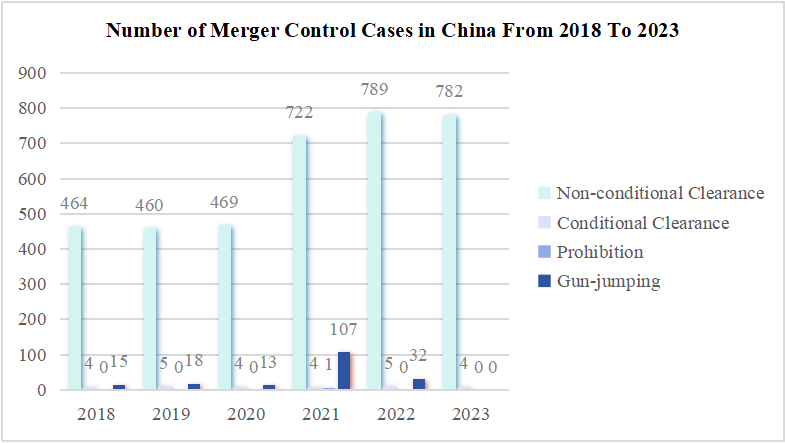
In the enforcement area, (1) with respect to merger review, in 2023, the SAMR concluded 797 cases, of which 786 were cleared. This marks a decrease of approximately 2.02% compared to 2022. Additionally, 4 cases were cleared conditionally, involving the sectors of chemicals, communications technology, and pharmaceuticals. (2) With respect to cartel agreements and abuse of market dominance, in 2023, the enforcement agency published 19 penalty decisions on monopoly agreements and abuse of dominance. These decisions mainly involved sectors that directly impact people's livelihoods, such as public utilities, pharmaceuticals, and building materials. It is anticipated that these sectors will continue to be the primary focus of regulatory enforcement in 2024.
In the judicial area, in 2023, the Supreme People’s Court (the "SPC") announced several significant judicial cases involving monopolistic conduct. These cases have provided valuable guidance and instructions for the interpretation of laws and the analysis of monopolistic behavior in judicial practice. It is anticipated that antitrust and competition litigation will continue to intensify, serving as a powerful means for companies to defend their rights and interests and pursue their commercial appeals.
In 2024, the SAMR will continue to address improper market competition and intervention, with the goal of enhancing stability and predictability in regulatory activities. This will include promoting the Regulations on Fair Competition Review, conducting thorough law enforcement on anti-monopoly and anti-unfair competition in sectors that affect people's livelihoods, refining and perfecting the rules and regulations for these issues, and increasing awareness and compliance among operators. Additionally, efforts will be made to promote fair competition and innovation in the platform economy, improve regularized supervision, and motivate operators on these platforms. The effectiveness of supervision and law enforcement will also be a priority, with a focus on monitoring and implementing the "Three Documents and One Letter" system, standardizing administrative penalties, and improving the overall regulatory system and rules.[4]
Legislation Area
In 2023, five supporting regulations of the AML, namely, the Provisions on Suppression of the Abuse of Administrative Power to Exclude and Restrict Competition, the Provisions on Prohibition of Monopoly Agreements, the Provisions on Prohibition of Abuse of Market Dominance, the Provisions on the Review of Concentrations of Undertakings, and the Provisions on Prohibiting Abuse of Intellectual Property Rights to Eliminate or Restrict Competition were published and implemented, the Antitrust Compliance Guidelines on Concentration of Undertakings was issued; the anti-monopoly law enforcement system of “Three Documents and One Letter” was formally established; the Antitrust Guidelines on Industry Associations was issued and came into effect on January 12, 2024 after enactment; the Provisions of the State Council on the Standard for Declaration of Concentration of Business Operators was issued and came into effect on January 26 after enactment. A number of provinces and municipalities issued compliance guidelines related to anti-monopoly and unfair competition applicable to their respective jurisdictions.
Key legislations and their highlights in 2023 are summarized below.
No. | Relevant Laws/Regulations | Key Highlights |
| 1 | (1)the Provisions on the Review of Concentrations of Undertakings (2)the Provisions on Prohibition of Monopoly Agreements the Provisions on Prohibition of Abuse of Market Dominance (3)the Provisions on Suppression of the Abuse of Administrative Power to Exclude and Restrict Competition (4)the Provisions on Prohibiting Abuse of Intellectual Property Rights to Eliminate or Restrict Competition The (1)-(4) were issued by the SAMR on March 10, 2023, and implemented on April 15, 2023; the (5) was issued by the SAMR on June 25, 2023, and implemented on August 1, 2023 | The Provisions on the Review of Concentrations of Undertakings clarify the notification and investigation procedures for concentrations of undertakings that do not meet the notification thresholds but raise competitive concerns. They also seek to optimize the factors used to identify the "acquisition of control or the ability to exert decisive influence", clarify the calculation of turnover for undertakings involved in the concentration, and refine the criteria for determining when a concentration has been implemented. Additionally, the provisions aim to improve the "stop the clock regime," enhance the selection and supervision system for trustees, and introduce new investigation methods that can be utilized by antitrust enforcement agencies during merger reviews.; The Provisions on Prohibition of Monopoly Agreements delete the 15% market share criterion and application procedure for applying the "safe harbor" regime stated in the previous exposure draft. They also improve the regulations on conducts of “organizing” and “substantially assisting” monopoly agreements, and further standardize the investigation procedures and the leniency system; and newly introduce the interview regime; The Provisions on Prohibition of Abuse of Market Dominance improve the antitrust regulations in the sector of platform economy by adding some of the "reasonable grounds" and forms of conducts to the relevant abusive behaviors, providing more perspectives for the compliance assessment of relevant business models in this sector. They also delete the relevant provisions on “self-preferencing” in the previous exposure draft; and provide more detailed guidance on the specific analysis on various types of abusive conducts; The Provisions on Suppression of the Abuse of Administrative Power to Exclude and Restrict Competition introduce the interview regime; provide for an administrative discipline interface system; and establish an interface with the fair competition review system. For more comments on the four regulations above, please see Haiwen Alert: Four Supporting Regulations of the Anti-Monopoly Law Promulgated.[5] The Provisions on Prohibiting Abuse of Intellectual Property Rights to Eliminate or Restrict Competition focus on the following aspects: (i) expanding the scope of "exclude and restrict competition by abusing intellectual property rights", covering monopoly agreements and abuse of market dominance through exercising intellectual property rights, and concentration of undertakings that has or may have competitive concerns; (ii) refining the rules for determining monopolistic behaviors through exercising intellectual property rights in accordance with the amended Anti-Monopoly Law (2022). More specifically, it improves and refines the rules for relevant market definition, the determination and presumption of market dominance, the identification of relevant monopolistic behaviors, and the factors to be considered in merger review and the specific types of restrictive conditions, with the characteristics of intellectual property rights and regulatory practice taken into account; and (iii) strengthening the regulation of typical and special monopolistic behaviors in the intellectual property field, such as engaging in monopolistic actions through patent consortia and by consortia members, market dominator using standard essential patents to implement "patent hijacking", etc. |
| 2 | Antitrust Compliance Guidelines on Concentration of Undertakings ("the Guidelines") Published by the SAMR on September 11, 2023 | The Guidelines marked the first compliance guidance released by anti-monopoly law enforcement authorities of the State Council in the field of concentration of operators since the implementation of the Anti-monopoly Law in 2008. The Guidelines involve general principles, main provisions on merger control review, key compliance risks, compliance risk management, safeguards for compliance management, and supplementary provisions. With respect to regulations and legal liabilities of the review of merger control, The Guidelines emphasize several matters that should be paid attention to in different stages of a concentration, including whether and when to make a filling, the "jumping gun", exclusion and restriction of competition and how to formulate a compliance management system for the merger control, etc. |
| 3 | The Notice of the Anti-Monopoly Commission and the SAMR on Establishing a System of "Three Documents and One Letter" for Anti-Monopoly Published by the Anti-Monopoly Commission and the SAMR on December 6, 2023 | The Notice established formally the system of "Three Documents and One Letter" (i.e., the Reminder Letter, the Notice of Regulatory Talk, the Notice on Legislative Investigation, and Decision of Administrative Penalty(Business Entity)/Administrative Recommendation(Administrative Organ)) for anti-monopoly law enforcement, also clarified the circumstances under which the “Three Documents and One Letter” are to be issued, enhancing the effectiveness and standardization of anti-monopoly supervision. This system will run through all areas and aspects of anti-monopoly supervision. |
| 4 | The Antitrust Guidelines on Industry Associations By the Anti-Monopoly Commission Published and came into effect on January 12, 2024 by the Anti-Monopoly Commission | The regulations elaborate on the specific circumstances under which industry associations may violate the AML, including the organization of operators in the industry to reach and implement monopoly agreements, the implementation of monopoly agreements in the capacity of operator, the abuse of market dominance, illegal concentration of undertakings, and the abuse of administrative power to exclude or restrict competition by industry associations that are authorized by laws and regulations to manage public affairs; Enumerate three types of high-risk behaviors that industry associations should avoid engaging in, including: promoting sensitive information exchange, discussion or communication among undertakings within the industry; publishing prices having guiding effects, or publishing price calculation formulas for the reference of undertakings in the industry; and publishing inaccurate or exaggerated market information, guiding operators in the industry to harmonize commodity prices; Guide industry associations in strengthening antitrust compliance; Clarify the factors to be considered in determining whether an industry association has engaged in monopolistic practices and specific legal liabilities. |
| 5 | The Provisions of the State Council on the Standard for Notification of Concentration of Undertakings Issued and came into effect on January 26 by the State Council | Increase turnover thresholds for concentration of undertakings: The concentration meeting the following thres holds shall be notified to the anti-monopoly law enforcement authorities beforehand, otherwise, the concentration is not allowed: (1)The worldwide turnover of all undertakings involved in the concentration exceeds RMB12 billion (RMB10 billion previously) in the last fiscal year, and the turnover in China of at least two undertakings among them exceeds RMB 800 million (RMB400 million previously) separately in the last fiscal year; (2)The turnover in China of all undertakings involved in the concentration exceeds RMB4 billion (RMB2 billion previously) in the last fiscal year, and the turnover in China of at least two undertakings among them exceeds RMB800 million(RMB400 million previously) separately in the last fiscal year. Emphasize on the powers of anti-monopoly enforcement authorities to initiate investigation: Where a concentration of undertakings does not reach the standards for notification, but there is evidence showing the concentration has or may have the effect of eliminating or restricting competition, the anti-monopoly law enforcement authority of the State Council may require the undertakings to make a notification. Establish and implement an assessment mechanism : the anti-monopoly law enforcement authority of the State Council shall assess how well the notification standards are implemented based on economic development. |
Enforcement Area
Merger Control Review
According to statistics from the SAMR[6], in 2023, the SAMR concluded 797 merger cases, of which 786 were approved, including 782 cases approved without conditions and 4 cases approved conditionally, and 11 case were withdrawn by the notifying parties after the acceptance. The average time taken to conclude cases was 25.7 days.
With respect to case types, the vast majority of cases were subject to simplified procedures and were concluded at stage I: 707 cases were concluded under simplified procedures, accounting for approximately 90% of all approved cases, and 79 cases were concluded under normal procedures, accounting for approximately 10% of all approved cases; in addition, 698 cases were concluded at stage I, accounting for approximately 89% of all approved cases.
In terms of the delegation of merger review to authorities in pilot areas, in 2023, the Administration for Market Regulation (“AMR”) of five provinces and municipalities, under delegation, concluded 352 simplified cases in total, of which, the Shanghai AMR concluded 157 cases, ranking the first and accounting for about 22% of all concluded cases, followed by the Beijing AMR, the Guangdong AMR, the Chongqing AMR and the Shanxi AMR concluding 75 cases, 61 cases, 49 cases and 10 cases, respectively.
With regard to the parties to the concentrations, t the majority of cases (56%) involve domestic enterprises, with a total of 437 cases. This is followed by 253 cases (32%) involving foreign enterprises, and 92 cases (12%) involving both domestic and foreign enterprises. Additionally, state-owned enterprises account for 49% of all cases (388 cases), while foreign enterprises make up 46% (361 cases) and private enterprises make up 38% (296 cases).
As regards industry distribution, the cases are dominant by industrial reorganization in the sectors of real economy and sectors concerning people’s livelihood. The number of concluded cases in the real economy manufacturing industry reached its peak in 2023, with a total of 291 cases, accounting for 37% of all cases. Among these, the largest number of cases involved chemical materials and products, with a total of 53 cases. Other industries with a significant number of cases include automobile manufacturing, computer and electronic equipment manufacturing, and pharmaceutical manufacturing. Other than manufacturing industry, there were also a higher percentage of cases in industries such as wholesale and retail trade, transportation, production and supply of water, electricity, gas, and heat, financial services, real estate, and IT services.
In terms of transaction types, horizontal concentration cases are the most numerous, totaling 417 cases and accounting for 53% of all cases. Vertical concentration cases, totaling 311, account for 40% of all cases, while mixed concentration cases, totaling 191, account for 24% of all cases.
With regard to transaction types, there are 445 cases of equity acquisition, accounting for 56% of all cases, and 270 cases of establishment of joint ventures accounting for 34% of all cases.
In terms of the industries involved in conditionally approved cases, two cases involve the industry of information and communication technology, one case involves the industry of chemical raw materials and one case involves the pharmaceutical industry.
Statistics on the Merger Control Cases from 2018 to 2023
Cases with Conditional Clearance in 2023
No. | Clearance Date | Case | Relevant Markets | Remedies |
| 1 | April 7, 2023 | Wanhua Chemical / Yantai Juli | Chinese market for toluene diisocyanate (TDI) | Behavioral Remedies: After closing the transaction, the annual average price of parties supplying TDI to customers in domestic China market shall not be higher than the average price for the 24 months before the commitment date under similar trade terms. In the event that the price of major raw materials decreases to a certain extent, the price of supplying TDI to customers in China’s domestic market shall be adjusted downward in a fair and reasonable manner; After closing the transaction and unless otherwise justified, the parties shall maintain or expand the production of TDI in China, and continue the R&D and innovation; Supply TDI to customers in the domestic China market adhering to the principles of fairness, reasonableness and non-discrimination. Unless otherwise justified, the parties shall not refuse, restrict or delay the supply of products to customers in the domestic China market; the parties shall not reduce the quality of supply and the level of service to customers in the domestic China market; and they shall not treat customers in the domestic China market who are under same conditions differently, except for reasonable commercial practices. Unless otherwise justified, the parties shall not force the customers in the domestic China market to purchase TDI products exclusively from them or carry out tying arrangements. |
| 2 | July 26, 2023 | MaxLinear / Silicon Motion | Chinese market for third-party NAND flash memory master control chips | Behavioral Remedies: The parties shall continue to supply NAND flash memory master control chip products in China on a fair, reasonable, and non-discriminatory (FRAND) basis; fulfill Silicon Motion’s existing customer contracts; and maintain Silicon Motion’s existing business relationships. The parties shall not substantially change the existing business model and operations of Silicon Motion. The parties shall retain Silicon Motion’s research and development (R&D) business relating to NAND flash memory master control chips in Taiwan, China. The parties shall retain Silicon Motion’s field application engineers in China as part of the R&D resources to provide support to its customers of NAND flash memory master control chips. For NAND flash memory master control chips sold in China, no malicious code shall be added to its design. |
| 3 | September22, 2023 | Simcere / Tobishi | Chinese market for batroxobin injection | Structural Remedies: Divest Simcere’s batroxobin injection business within a stipulated time frame under the Provisions on the Examination of Concentration of Undertaking. Assume the obligation of supplying batroxobin API to the buyer of the divested business, and provide necessary assistance to the buyer to establish a direct supply relationship with DSM. Behavioral Remedies: Terminate the agreement between Simcere and DSM over the exclusive supply of batroxobin API in China. Post the concentration, lower price of batroxobin injections commonly used in clinical practice for end users, by no less than 20% of the current price online. Post the concentration, maintain supply to the demand for batroxobin injections commonly used in clinical practice. If within the required time frame the exclusivity agreement is not terminated, the divestiture is not completed, or the buyer fails to conduct research and development, then following the concentration, the end user price of batroxobin injections commonly used in clinical practice should be reduced by no less than 50% of the current price online. Simcere and the combined entity may apply to SAMR for the removal of these behavioral conditions after six years from the effective date. |
| 4 | November21, 2023 | Broadcom / VMware | global and Chinese markets for non-public cloud virtualization software, fibre channel adapters, storage adapters and Ethernet network cards | Behavioral Remedies: When selling Broadcom’s fibre channel adapters, storage adapters, Ethernet network cards ("related hardware products") and VMware’s server virtualization software to domestic market in China, Broadcom shall not tie-in products in any way or attach any other unreasonable trading conditions without justifiable reasons; shall not hinder or restrict customers from purchasing or using the above products alone; and shall not discriminate against customers who purchase the above products separately in terms of service level, price or function. Continue to ensure the interoperability of VMware’s server virtualization software with related hardware products sold by third-parties in domestic market. Broadcom’s certification team for fibre channel adapters shall maintain the current activities and continue to develop, certify, and release drivers for Broadcom’s fibre channel adapters to ensure interoperability with virtualization software of third-party servers. Taking protective measures for the confidential information of third-party hardware manufacturers, including but not limited to signing confidentiality agreements with third-party hardware manufacturers, clarifying the scope of information use, storing confidential information separately, ensuring the separation of relevant personnel, and prohibiting cross-employment. Other two confidential undertakings. The above undertakings are valid for a period of 10 years from the effective date and will be automatically terminated upon expiry of the period. |
Monopoly Agreements and Abuse of Market Dominance
Throughout 2023, a total of 19 cases on monopoly agreements and abuse of market dominance were decided by local AMRs and subject to administrative measures, involving sectors of active pharmaceutical ingredients and drugs, insurance, building materials, public utilities such as water supply, gas supply, etc. These cases are summarized below:
No. | Case | Date Announced | Issue | Total Confiscation And Fine (RMB ’000) | % of Turnover |
1 | Administrative Penalty on Monopoly Agreement reached and implemented by Huangshan City Huangshan District Taiping Lake Cruise Development Co., Ltd. | 2023.1.4 | Price fixing; market dividing | 430 | 3% |
2 | Administrative Penalty on Abuse of Market Dominance of Chongqing Yongkang Gas Co., Ltd. | 2023.2.1 | Impose unreasonable trade conditions | 2,410 | 5% |
3 | Administrative Penalty on Abuse of Market Dominance of Northeast Pharmaceutical Group Co., Ltd. | 2023.2.20 | Price fixing or changing; market dividing | 133,000 | 2% |
4 | Administrative Penalty on Abuse of Market Dominance of Tianjin Jinyao Pharmaceutical Co., Ltd. | 2023.3.22 | Unfair high prices | 27,721.3 | 2% |
5 | Administrative Penalty on Abuse of Market Dominance of Rizhao WaterSupply Company Limited | 2023.4.7 | Impose unreasonable trade conditions | 2,180 | 1% |
6 | Administrative Penalty on Monopoly Agreement reached and implemented by Bengbu Anye Clean Energy Co., Ltd. and Bengbu Xinyuan Gas Co., Ltd. | 2023.5.24 | Price fixing | 1,755.9 | 4% |
7 | Administrative Penalty on Monopoly Agreement reached and implemented by Wuhan Huihai Pharmaceutical Co., Ltd. and Yuanda Pharmaceutical (China) Co., Ltd. | 2023.5.28 | Limiting the amount of production and sales; impose unreasonable trade conditions | 320,641.5 | 2%-3% |
8 | Administrative Penalty on Monopoly Agreement reached and implemented by Beijing Zizhu Pharmaceutical Management Co., Ltd. | 2023.5.29 | Maintaining minimum resale price | 12,643.5 | 2% |
9 | Administrative Penalty on Monopoly Agreement reached and implemented by Shanghai Xudong Haipu Pharmaceutical Co., Ltd. and Tianjin Tianyao Pharmaceuticals Technology Co., Ltd. | 2023.6.2 | Price fixing or changing; dividing sales market | 57,055.8 | 3% |
10 | Administrative Penalty on Monopoly Agreement reached and implemented by Chengdu Engineering Cost Association | 2023.6.2 | Monopoly agreement of associations | 300 | N/A |
11 | Administrative Penalty on Monopoly Agreement reached and implemented by Fujian Blasting Equipment Industry Association and member units | 2023.6.2 | Monopoly agreement of associations | 1,000 | N/A |
12 | Administrative Penalty on Abuse of Market Dominance of Huaneng Rizhao Heat Power Co., Ltd. | 2023.6.2 | Exclusive dealing; differentiated treatment | 4,259.8 | 1% |
13 | Administrative Penalty on Abuse of Market Dominance of Nanjing Zhongran City Gas Development Co., Ltd. | 2023.6.2 | Tying; impose unreasonable trade conditions | 50,400.7 | 2% |
14 | Administrative Penalty on Monopoly Agreement reached and implemented by 8 insurance companies in Banan, Chongqing | 2023.6.19 | Price fixing; dividing sales market | 11,510 | 1% |
15 | Administrative Penalty on Monopoly Agreement reached and implemented by 10 bottled liquefied gas firms in Nanjing | 2023.9.12 | Dividing sales market | 8,273.5 | 2% |
16 | Administrative Penalty on Monopoly Agreement organized by Beijing Go Association | 2023.9.12 | Price fixing | 166.2 | 2% |
17 | Administrative Penalty on Monopoly Agreement reached and implemented by Guizhou Jinsha Yuanda New Environmental Protection Building Materials Co., Ltd. and the other three building material companies | 2023.9.12 | Price fixing or changing; dividing sales market | 6,008.2 | 3%-5% |
18 | Administrative Penalty on Monopoly Agreement reached and implemented by 21 local concrete firms in Hangzhou city | 2023.11.9 | Price fixing; limiting the amount of production and sales; dividing sales market | 174,083.8 | 2%-5% |
19 | Administrative Penalty on Abuse of Market Dominance of Shanghai No.1 Biochemical & Pharmaceutical and other three pharmaceutical companies | 2023.12.22 | Unfair high prices | 1,219,341.9 | 3%-8% |
Judicial Area
In 2023, the SPC and other courts announced several noteworthy judicial cases involving monopolistic behaviors. These cases have offered valuable guidance and instructions on jurisdiction, rulings, and substantive analysis of monopolistic conduct from a legal interpretation and judicial practice standpoint. The following is a summary of the important judicial cases involving monopolistic conduct in 2023:
No. | Case | Facts | Key points of the Judgment |
| 1 | Maoming Dianbai District Jianke Concrete Co., Ltd. / Guangdong Administration for Market Supervision | 19 ready-mixed concrete companies in Maoming City and Gaozhou City of Guangdong Province, including Maoming Dianbai District Jianke Concrete Co., Ltd (" Jianke Concrete "), communicated and negotiated through gatherings and WeChat regarding uniformly raising concrete prices, and raised prices by different magnitudes at the same time. Guangdong Administration for Market Regulation determined that the conducts of the 19 enterprises constitutes the entering and implementing of monopoly agreement and imposed administrative penalty. The Jianke Concrete appealed the penalty decision and filed an administrative lawsuit with the Guangzhou Intellectual Property Court, requesting the revocation of the penalty decision. | The 19 ready-mixed concrete companies in the case exchanged information among themselves, committed a conspiracy to restrict and exclude price competition, and their conducts were consistent, to which the parities could not provide a reasonable explanation, resulting in anti-competitive effect. The relevant acts of Jianke Concrete constituted "other concerted conducts" under the horizontal monopoly agreement. With regard to the calculation of fine amount, law is that "the sales in the previous year" shall be the basis for calculating the fine. Applying the law, the SPC ruled that in principle, the "previous year" should be determined as the year in which the violation occurred that was closest to the time when the penalty decision was made and the facts most closely related. |
| 2 | SAIC General Motors Sales Co., Ltd. RPM Case | In 2016, the Shanghai Municipal Development and Reform Commission fined SAIC-GM for setting the minimum resale price of specific vehicle lines. In 2018, a car owner Miao Chong sued SAIC-GM and its dealer Shanghai Yilong Automobile Sales & Service Co., Ltd. claiming damages caused by monopoly conducts of SAIC-GM of RMB 10,000, as well as other reasonable expenses of RMB 7,500. | If the penalty decision of the anti-monopoly enforcement agency that determined a monopoly conduct has not been subject to an administrative litigation within the statutory period, or has been affirmed by a court’s judgment in force, no further proof is required for the plaintiff to establish such monopoly conduct in a relevant monopoly civil dispute, unless if sufficient evidence to the contrary has been submitted disproving it. In the event that a consumer files a civil lawsuit claiming for damages arising from the conducts of resale price maintenance, all the parties who entered into and implemented the vertical monopoly agreements of resale price maintenance shall be deemed to have jointly committed the infringement action. In the event that a consumer files a civil lawsuit claiming for damages arising from the resale price maintenance, the amount of compensation shall be the difference between the lowest resale non-competitive price as restricted by the operators and the competitive price . |
| 3 | Mr Wang / Beijing Lianjia Real Estate Brokerage Co., Ltd. ("Lianjia") and Beijing Zhongrongxin Financial Guarantee Co., Ltd. | Mr Wang sued Lianjia on the basis of abuse of dominant market position due to his dissatisfaction with Lianjia’s high brokerage fees and bundled sales of "transaction guarantee service fees" in second-hand property transactions. | Regarding the determination of the relevant markets for this case, the relevant service markets shall not include the housing rental market, the brokerage market for the sale and purchase of non-housing (commercial office buildings, industrial plants, etc.) or new housing, or the market for the sale and purchase of stock housing not via brokerage. The relevant market in this case shall be defined as the "brokerage service market for the sale and purchase of stock housing". In terms of the calculation of market share, the competition in the real estate brokerage service market is reflected in the competition for housing on the one hand, i.e. the competition for the sellers, and competition for customers on the other hand, i.e. the competition for the buyers. The competitive power of the undertakings ultimately resides in the actual volume of transactions that could be facilitated. As opposed to the market dominance factors mentioned by the Court of First Instance reflecting only the scale of the company’s own services, it is more appropriate to consider indicators such as deal volume, housing resource and client resource . Based on the deal volume data published by the intermediary association, it can be deduced that the Lianjia has a dominant market position with a share of over 50% in the brokerage service market for the sale and purchase of stock housing in Beijing in 2016. However, the evidence filed could not prove Lianjia's abuse of such dominance, so Mr. Wang’s appeal was rejected and the original decision was upheld by the SPC. |
| 4 | Yangtze River Pharmaceutical Group Guangzhou Hairui Pharmaceutical Company Co., Ltd. ("Hairui Company"), Yangtze River Pharmaceutical Group Co., Ltd. (with Hai Rui Company collectively referred to as the "Yangtze River Group") / Hefei Enruite Pharmaceutical Co., Ltd. ("Enruite"), Hefei Industrial Pharmaceutical Co. (with Enruite Pharmaceutical collectively referred to as "Industrial Pharmaceutical") and Nanjing Haichen Pharmaceutical Co., Ltd. | In 2019, Yangtze River Group filed a lawsuit against Industrial Pharmaceutical, claiming the defendant abused its dominant market position, and requested the court to order Industrial Pharmaceutical to cease its illegal acts and compensate Yangtze River Group for economic losses. There was a cooperative relationship between Industrial Pharmaceutical and Yangtze River Group in respect of the API for desloratadine citrate disodium tablets ("the API involved"), specifically, (i) Yangtze River Group and Industrial Pharmaceutical entered into a long-term purchase and sales contract for the API involved in 2017, agreeing on the price and minimum purchase quantity of the API involved to be purchased from Enruite by Hairui Company, and that if Hairui Company purchase or use any API that are not provided by Enright without the written consent of Industrial Pharmaceutical, Hairui Company will be required to pay liquidated damages; (ii) During the cooperation period, Industrial Pharmaceutical increased the price of the API involved from RMB 15,600/kg to RMB 48,000/kg; (iii) Industrial Pharmaceutical signed a Patent Right Transfer Agreement with Yangtze River Group trasferring “Deloratadine polyacid alkali metal or alkaline earth metal salt complex salt and its pharmaceutical compositions” ("998 Patent"). This agreement provided that Industrial Pharmaceutical can receive a certain amount of commission fee from Yangtze River Group for the 998 patent; (iv) There was a dispute between Industrial Pharmaceutical and Yangtze River Group regarding another project "Technology Transfer Contract for Cefetamet Hydrochloride and Cefetamet Hydrochloride for Injection" ("Technology Transfer Contract"). Yangtze River Group claimed that Industrial Pharmaceutical had not fully performed its obligations under the Technology Transfer Contract and should refund the relevant technology transfer fees, but during the negotiation of the long-term supply contract of the API involved, Industrial Pharmaceutical forced Yangtze River Group to sign a supplementary agreement to waive the claim for the technology transfer fee in order to terminate the Technology Transfer Contract. However, the Industrial Pharmaceutical claimed that the contract could not continue to be performed because of the change of PRC’s drug management policies, and was terminated by mutual consent. | The actual competitive constraints faced by an operator may be both direct and indirect; if indirect competitive constraints have sufficient influence on the operator’s behavior, the indirect competitive constraints should also be fully considered in the determination of market dominance. API is an intermediate input, and there is a correlation between the demand for the intermediate input and the demand for the downstream products using the intermediate input. Generally, the stronger the correlation, the more important are the indirect competition constraints imposed by the downstream market of the intermediate input on the upstream operators. The operators of a particular API may face both direct competition from operators supplying the same API and indirect competitive constraints brought about by competitive constraints on downstream preparation operators, meaning competition in the downstream preparation market may be transmitted to the upstream API market and create competitive constraints on that API operator. When the monopolistic act at issue involves the exercise of effective intellectual property rights, the analysis of the restrictive or exclusion effect on competition of the monopolistic act at issue requires consideration of the legal effects necessarily arising from the proper exercise of intellectual property rights in accordance with relevant law. If the so-called effect of excluding or restricting competition is the inevitable result of proper exercise of specific intellectual property rights in accordance with the law, and does not exceed the scope of legal effect contemplated by the intellectual property rights, such effect of excluding or restricting competition under the anti-monopoly law shall not be concluded. The main purpose of anti-monopoly law in regulating unfairly high prices is to maintain the order of market competition, protect consumer welfare and avoid harming consumer welfare in the event of persistent market failures. If an overpricing neither has a clear effect of excluding or restricting competition nor has an obvious detriment to consumer welfare, it is inappropriate to conclude that it constitutes an abuse of market dominance. The reason is that overpricing can be self-corrected through the market dynamics. The legal analysis of overpricing needs to emphasize on its actual or potential anti-competitive effects, and to avoid damaging the investment incentives of incumbent operators and potential entrants in the market, which could lead to a "chilling effect" reducing innovation and ultimately harming consumer welfare. Therefore, the determination and regulation of overpricing shall be particularly prudent. In determining that the operator abuses its dominance in a relevant market by attaching unreasonable trading conditions on transactions in another relevant market, in general, at least two conditions should be met at the same time: (i) the first condition look into the appearance, that is, the operator shall have explicit or implicit intention to attach unreasonable trading conditions , such as requiring that specific transactions must be bundled with other transactions, or requiring that transactions in other relevant markets be concluded as a prerequisite for concluding transactions in the relevant market in which the operator has a dominant market position; (ii) the second condition look into the effect and consequence, that is, the operator shall have improperly obtained undeserved benefits or harm the interests of the counterparty to the transaction, and have excluded or restricted competition in the relevant market by attaching unreasonable trading conditions . |
| 5 | Guangzhou MengBian Information Technology Co., Ltd ("MengBian") / Amazon European Services ("Amazon") | MengBian is an e-commerce enterprise engaged in cross-border trade agency, import and export of goods and other external trade business. Mengbian claimed that Amazon owned a dominant market position in the field of e-commerce within Europe, and Amazon has closed MengBian’s online store, blocked its account, and refused to trade without justifiable reasons. MengBian requested the court to order Amazon to unblock its frozen account, change the buy box and platform algorithms and data, so that MengBian can freely choose the logistics service enterprises and can compete fairly with Amazon’s self-operated products. At the same time, MengBian also required Amazon to compensate for its economic losses and refund its account balance. | The decision has not been published yet. With respect to the jurisdiction of the Guangzhou Intellectual Property Court over this case, the Guangzhou Intellectual Property Court held that according to Article 2 of the Anti-Monopoly Law, this Law applies to monopolistic conducts outside China that has an exclusionary or restrictive effect on competition in the domestic market. Therefore, if a party believes that it has suffered losses in China as a result of an offshore monopolistic act and files a lawsuit, the place where the alleged monopolistic conduct outside China exerting an exclusionary or restrictive effect on competition in China market occurred can be regarded as the jurisdictional nexus of the case. Therefore, the Guangzhou Intellectual Property Court has jurisdiction over this case. |
| 6 | Li Zhen / Alipay.com Co., Ltd., Zhejiang Tmall Network Co., Ltd., Zhejiang Taobao Network Co., Ltd., Ant Group Co., Ltd. and Alibaba Group Holding Limited (collectively, the "Defendants") | Li Zhen alleged that the Defendants engaged in collective abuse of market dominance by limiting consumer choice in online payment services to Alipay based on its market dominance in online retail platform services market in China, which excluded and restricted competition in the online retail platform services, third-party mobile payments and data markets in China, restricted the users’ right of free choice and fair dealing, therefore constituting monopolistic behavior of restraints of trade, tying, and attaching unreasonable trading conditions. | The online payment service is an inherent part of online retail platform service, and it is not an independent product/service relative to the online retail platform service. Online retail platforms have two-sided attributes, and from the perspective customers and the demand-side, the information dissemination, transaction matchmaking, warehousing, logistics, payment and settlement, shipping and delivery and other services as provided by the platform altogether constitute an indispensable part facilitating the completion of transactions. On the alleged platforms Taobao APP and Tmall APP, non-payment services or payment services cannot be sold separately, and therefore the Plaintiff’s allegation of tying was without grounds. Consumers using Tmall and Taobao platforms do not have to bear the cost of the online retail platform services themselves, and would not establish independent transactional relationship with the online payment service suppliers of the online retail platforms. The merchants on the platforms are also using integrated online retail platform services, and they do not establish independent transaction with the online payment service providers of the online retail platforms either. The Plaintiff’s allegation of restraints of trade is untenable. During the period of the accused monopolistic behaviors, despite that Taobao and Tmall configured Alipay as the payment method on the platforms, there was no evidence that Taobao and Tmall APP rejected other suppliers of payment services from connecting to the retail platforms. In the meantime, the supplier of Alipay has shown strong innovation capability, and its payment service is competitive in the field of online payment services. Tmall and Taobao’s choice of Alipay and the establishment of their stable business cooperation not only reflects the cooperation between the affiliated companies, but also, to a certain extent, has proven to be able to improve the safety and efficiency of transactions and the consumer welfare. In light of the need of online platform services to integrate payment services, and the fact that the payment service of Alipay possesses strong competitiveness, it is insufficient to conclude that Tmall and Taobao platforms’ choice of Alipay for online payment services is unreasonable. Thus, the Plaintiff’s allegation of unreasonable transaction conditions is untenable. |
| 7 | Zhang / Yibin Heng Investment Group Co., Ltd., Sichuan Yibin Wu Building Materials Industry Co., Ltd. and others | In March 2010, a trade association in Yibin (" Trade Association ") was established with members including a brick factory under Zhang’s name (" Brick Factory "). In 2009, the "Yibin Brick Industry Work Conference" was convened, during which the members negotiated and agreed on the establishment of the Brick Association Council and the Coordination Office, required that the brick factories in Cuiping District and within its 30-kilometers radius, in Baixi and within its 15-kilometers radius to cooperate with Yibin Ren Trading Co., Ltd. (" Ren Company ") to jointly establish a local brick association and prevent outside suppliers from entering such area. Discontinued manufacturers under such arrangement (including the Brick Factory) would receive monthly leasing and contracting fees from the Ren Company, while continued manufacturers would pay market management and technical guiding fees to Ren Company. The predecessor of the Trade Association entered into a “Suspension and Rectification Contract” with the Brick Factory and other brick manufacturers. In 2013, the Sichuan Industry and Commerce Bureau determined that the conducts of Trade Association constitute a monopoly agreement of controlling the production quantity of products. Zhang later sued the Trade Association and related members to the court, and alleged that he had suspended the production according to the "Suspension and Rectification Contract" and merely received an insignificant amount of suspension support fees before September 2011; the aforementioned actions essentially had the effect of excluding Zhang’s participation in competition, constitute a monopolistic behavior, and infringed on Zhang’s legitimate rights and interests. Zhang claimed that the Trade Association and concerned sponsor member units, as well as Yibin Heng Investment Group Co., Ltd., should be ordered to jointly compensate for his economic losses and reasonable expenses. | Zhang's right to claim for compensation as the implementer of the horizontal monopoly agreement in question for his so-called economic losses from other implementers of the monopoly agreement should be considered in accordance with the legislative purpose of Article 50 of the Anti-Monopoly Law [7] ("AML"), the characteristics of the concerned monopolistic behavior, and the legal effect of compensation for damages. The legislative purpose of the foregoing provision is to provide a civil judicial channel for stopping and combating monopolistic behavior, and to provide civil remedies for persons who have suffered damage due to such monopolistic behavior. If the Plaintiff is not a victim but instead the implementer of the monopolistic behavior under the AML, its claim for damages is essentially a demand for the allocation of monopolistic interest, which is not the in line with the object of remedy as intended under the AML. The person claiming for compensation of damages must act in a legitimate and lawful manner. People who actually participate in and carry out illegal activities, even if suffering losses due to such illegal activities, should not receive any relief due to the illegitimacy of their own acts. Granting damages to the implementers of monopolistic behavior may have a negative legal effect of encouraging relevant monopolistic behavior. The implementer of a horizontal monopoly agreement is not entitled to claim for compensation for his so-called economic damages by other parties to such agreement. |
Slide up to review comments
[1] For more details, please see: https://www.gov.cn/zhengce/zhengceku/202309/content_6903364.htm
[2] For more details, please see: https://www.samr.gov.cn/zw/zfxxgk/fdzdgknr/fldzfys/art/2024/art_3ce3a7fec76146cfb8a7927db10683b2.html
[3] For more details, please see: https://www.gov.cn/zhengce/content/202401/content_6928387.htm
[4] For more details, please see: https://mp.weixin.qq.com/s/5j1SxK7KdexhUmy9YA7Cjg
[5] For more details, please see: https://mp.weixin.qq.com/s/4h7zGnDxbbGNVjQQpGKmPg
[6] For more details, please see: https://mp.weixin.qq.com/s/evw4zd3Id3iSUIVd0wGfjw
[7] Article 60 of the Amended Anti-Monopoly Law (2022).