In January 2023, the “Legend” private server “Oriental Forgetfulness” was suspended, after its director was sentenced to 6 years and 10 months imprisonment for adding gambling mechanisms to the server, such as “Chosen Maps” and "Pearl of the Orient" and making an illegal profit of more than RMB 1.98 million. [1]This incident has sounded the alarm for gambling-related games. From traditional guessing and Texas Hold'em to new online game mechanisms such as Gacha game and Loot Box, while entertaining and interesting, they may also be inadvertently assumed to have a gambling-like nature due to the fact that it carries a certain degree of chance and addictiveness. Therefore, it has become an important compliance issue for game companies to avoid the risk of gambling in their operating games.
This paper will discuss the scope of “gambling” in online games as a starting point, then analyze the requirements for the gameplay of chance games, and discuss the regulatory attitudes of some countries or regions where games are mainly exported to.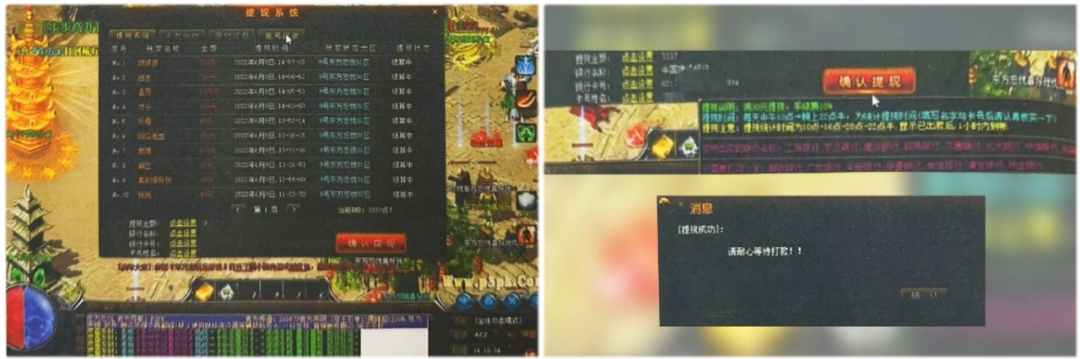
Game interface screenshot of the “Legend” private server "East Forgetfulness"
I、Constitutive Requirements and Legal Effects of Gambling Games
Identifying the gambling content of a game is a prerequisite for determining whether a game constitutes gambling. In fact, “Gambling” is strictly prohibited under Chinese law, but it has no clear definition.
i. “Gambling” ’s meaning and its determination in the context of Internet game
Article 303 of the Criminal Law of the People's Republic of China (“Criminal Law”) stipulates that whoever runs any casino shall be sentenced to fixed-term imprisonment of not more than five years, criminal detention or public surveillance and shall be fined concurrently. In addition, Law of the People's Republic of China on Administrative Penalties for Public Security Article 70 clearly states that a person who provides conditions for gambling for the purpose of making profits, or participates in gambling with a relatively big amount of money, shall be detained for not more than five days or be fined not more than 500 yuan.
However, “gambling” is not clearly defined in above provisions of Criminal Law. “The Modern Chinese Dictionary” explains “gambling” as “to win or lose by playing games such as card games and dice rolling, with as property as the stake". Internationally, it is generally recognized that gambling consists of three core elements: (1) two or more participants put something of value or money at stake; (2) participants expect to win something of higher value or money; and (3)the outcome of the game or activity depends on chance.
This paper focuses on the phenomenon of “gambling” in the Internet game environment. It is worth noted that many Internet games involve some degree of luck or chance, but this does not mean all games with a luck element constitute gambling. The key is the presence or absence of monetary or other valuable stakes and rewards.
According to the “Guidelines on Key Points for the Regulation and Enforcement of Virtual Currency in Online Games”, if a game is recognized as involving gambling, in addition to the contingency factor of “by chance, such as drawing lots, betting on treasures and random selection”, it must also meet the following conditions: (1) On the input side, users need to put in virtual currency of the online game, or physical goods, either directly or indirectly; (2) On the output side, users can obtain legal currency, virtual currency or props, or value-added services, either directly or indirectly. In short, for a game to constitute gambling, there must be an input of money or value elements and an output of money or value elements.
Therefore, when assessing the risk of Internet game companies involving gambling, if the game or its gameplay meets the following three conditions simultaneously, there is a risk to be suspected as gambling: (l)the main purpose of the game participants is to make profits rather than to purely entertain or relax; (2)the game or gameplay is characterized by the chance of “betting on a small amount to win a big amount”; (3)the game requires users to invest in legal currency or virtual currency, and can produce cash or real goods directly or indirectly to form a cycle of funds.
Depending on the extent of gambling involvement, gambling-related games can be categorized into (1) gambling games, and (2) games that promote gambling. The output of the former is generally legal currency or virtual coins that can be exchanged for legal currency, the output of the latter is generally virtual props and value-added services. The operation of gambling games carries a high criminal risk, while the operation of games that promote gambling carries the risk of game suspension and administrative penalties.
ii. Forms of Operating Gambling Games
Operating gambling games may constitute crime of “running a casino”. According to Article 1(1) of Opinions on Issues concerning the Application of Laws in the Handling of Online Gambling Criminal Cases, organizing gambling activities by transmitting gambling videos and data via the internet, mobile communication terminals or other devices under any of the following circumstances, shall constitute the act of “setting up gambling casinos” of the Criminal Law: (1)establishing a gambling website and accepting bets; (2) establishing a gambling website and providing it to others for the purpose of organizing gambling activities; (3) acting as an agent for a gambling website and accepting bets; or (4) participating in the sharing of profits obtained by a gambling website.
In practice, the operation of gambling games constitutes the crime of running a casino in the following main forms:
First, operating as the identity of the dealer: as the dealer to participate in or manage the gambling game, accepting bets, winning bets, or through the game draw profits, in essence, belongs to the illegal gambling site, constituting the crime of running a casino. For example, a “group owner” uses the “Xingyue Yunnan Mahjong” APP to buy “room diamonds” to open a room and set up a mahjong group, and at the end of each game, the loser sends the corresponding amount in the form of a red packet to the “group owner” according to the rules of settlement of points, and the “group owner” makes a profit before sending it to the winners, which constitutes the crime of running a casino.[2]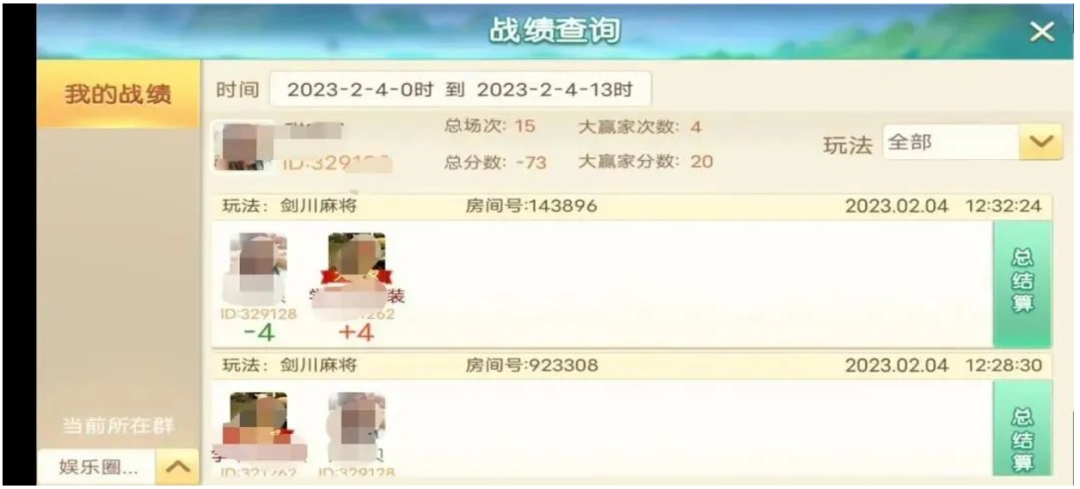

Second, reverse conversion of virtual currency: legally established gaming websites provide reverse conversion of virtual currency services. According to relevant regulations, virtual currency only has a one-way payment function, i.e., players can buy virtual currency with legal currency, but cannot exchange virtual currency for real currency. If the game platform provides fiat currency or virtual currency for betting, and the virtual currency is used as gambling capital when it is won in a lucky way, the game may constitute a gambling platform, and the operator may constitute the crime of running a casino. For example, someone who establishes an online game platform such as “Catching Fish Gathering” or “Love Fishing”, acquires game coins won by players at a low price and then sells them at a high price to earn the difference, belongs to conducting two-way exchanges for unspecified persons, thus constitutes the crime of running a casino.[3]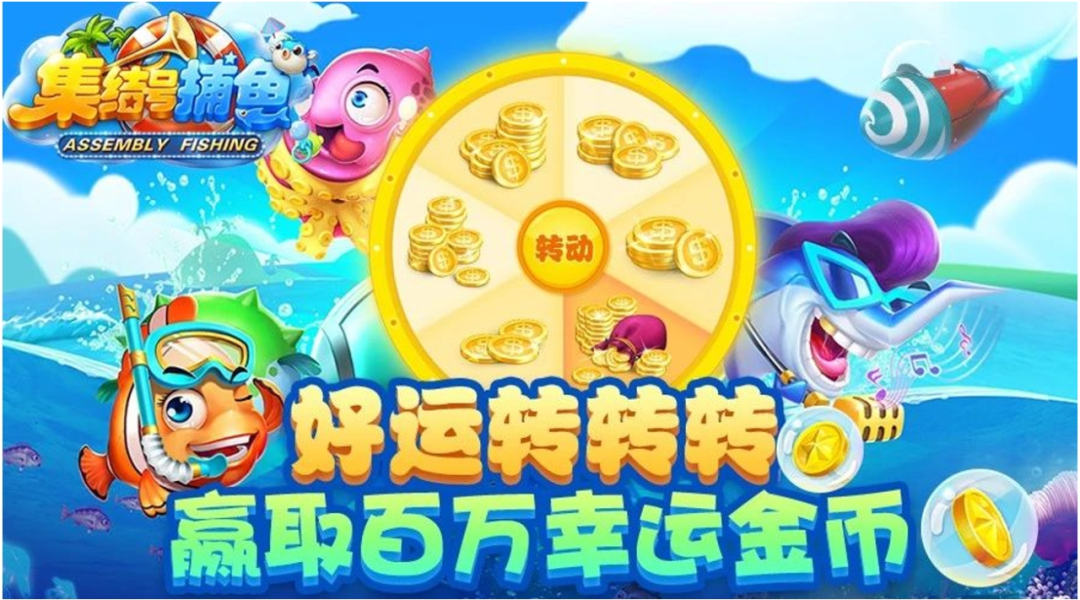
Third, indirectly providing reverse exchange services: In some cases, game websites may indirectly participate in illegal transactions of virtual currencies through third-party dealers, which is essentially the same as exchanging gambling chips, and may similarly commit the crime of running a casino. Take the “Happy Villa” game website operated by Net Alliance as an example, the platform allows players to participate in the game by recharging or purchasing game scores from the bankers. After winning points in the game, players can choose to sell them to a dealer in exchange for RMB, if they lose points, they need to recharge again or buy points from the dealer. This model essentially constitutes a closed loop of funds, forming a “cash-virtual currency-cash” circulation system between the platform and buyers. Under this model, although the game site is not directly involved in the exchange of virtual currency, but through the establishment of the general agent of the silver merchant, acquiescence and contributed to the occurrence of illegal transactions, its behavior has exceeded the scope of the normal game operation, is suspected of constituting the crime of running a casino".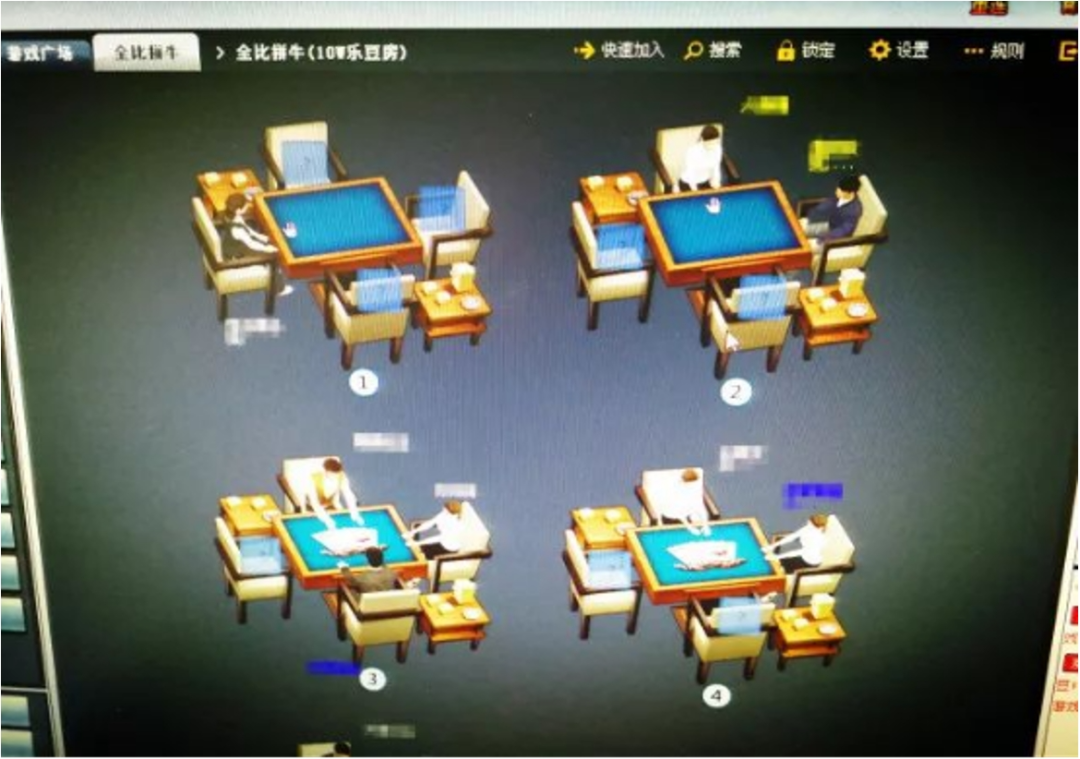
Fourth, provision of gambling conditions: game companies may be considered committing the crime of running a casino by providing gambling conditions. Although these game platforms themselves do not directly set up a reverse exchange mechanism or collude with dealers to conduct exchanges, they may be in breach of the criminal law if they fail to fulfil supervisory responsibilities. For example, in the case of the “Great Xinjiang Mahjong” app, after players had expressed their views on the settlement of gambling funds, the platform not only failed to take effective measures, but also incentivized promoters to develop agents through sales assessment and continued to provide technical support for gambling activities, thus constitutes the crime of running a casino. The company which knowingly provides reverse exchange services may also be found of assisting the crime. However, if the normal operational behavior of the website, in order to recover the cost of the system, such as automatically consuming a certain percentage of virtual currency every time the player plays the game, it does not constitute gambling. For example, “Tencent Happy Mahjong” collects service fees from users by collecting “game beans” and selling “monthly cards” and other props. Users can obtain these props freely by logging in daily, watching advertisements, and participating in carousels, etc., which does not constitute an aid to gambling.[4]
II、Differences Between Gameplay and Gambling and Game of Chance’s Compliance Requirements.
Games of chance that has “random” nature, if not have a closed loop of funds, do not constitute gambling, but still have certain compliance requirements.
i. Differences between gameplay and gambling
What distinguishes a gameplay or a game of chance from gambling is (1) whether it has a profit-making purpose, (2) the relationship between the outcome of chance and the purpose of the game, and (3)whether it has a reverse redemption feature.
First of all, the essence of game of chance lies in entertainment rather than profit-making. The core purpose of players in online games, whether they are recharging for game rewards or buying equipment, game currency, etc., is to meet their personal entertainment needs. In this process, the flow of funds is unidirectional, that is, from the consumer —— the player, flow to the service provider —— the game platform. Activities such as recharge and cashback are essentially just "freebies" when shopping, and do not change the unidirectional flow of funds. In gambling, the flow of funds is two-way, the purpose of the player recharge is to win or lose to obtain economic benefits, the essence is using the small to win the big, pursuing the reverse flow of funds. For example, in the case of “Weng running a casino”[5], the court pointed out that whether or not it constitutes the act of running a casino for profit in disguise needs to be considered comprehensively with regard to the subjective purpose and objective behavior. If the perpetrator knows that others use game applications to gamble, but still provides them with WeChat groups, sets gambling rules, and organizes gambling activities through online chess and card game software, and collects fees in disguise to make a profit by limiting the channels for purchasing virtual game coins, the rules for consumption, and the rules for cash redemption, etc., then it is an act of running a casino.
Secondly, the realization of the purpose of the game of chance does not depend on the outcome of chance. In online games, no matter what the outcome is, it will not affect the player' s ability to realize the purpose of entertainment and relaxation. From the moment the user opens the game interface, his or her entertainment purpose has been achieved. But in gambling, the realization of the outcome is highly dependent on luck, and the role of technology cannot surpass luck, resulting in a gambling outcome that can only lead to a single-party profit or no one's profit with no possibility of a win-win. For example, in the case of “ Yufang Wang and Jianping Li running a casino”[6], the court held that the operator's establishment of a mystery box website to organize lucky draws actually provided players with the opportunity to win by a small amount, and the results of the winners were determined by chance, which was an act of shooting for luck, and had the nature of gambling. The player's behavior of “paying for the input - randomly selecting giving up the prize to get the discounted virtual currency - drawing the box again” belongs to gambling behavior, and the operator provides a platform for gambling behavior, which constitutes the crime of running a casino.
In addition, game of chance usually do not directly or indirectly set up a channel for reverse exchange through “dealers”. In gambling, “up-and-down-points service” is its core feature, "up points" is that players convert legal currency into game coins for betting, “down points” is that players will win the game coins into legal currency or virtual currency, to make profits. For example, in the case of “Xu and others running a casino”[7], the court held that Xu and others added a ball game guessing module to the APP, and gamblers exchanged their funds for guessing coins to place bets, with the results of winning and losing being determined by the chance of the ball game. Xu and others also set up “winning the guessing coins can win 100% Jingdong E-card”, and arranged for people to recover the Jingdong E-card in the WeChat group so that the guessing coins are exchanged for legal currency, which constitutes the crime of running a casino.
ii. Avoiding the risk of being involved in gambling
Although there is a fundamental difference between game of chance and online gambling, the two may be transformed, so game companies must take appropriate measures to reduce the legal risk of being recognized as gambling. Below are some key principles that game companies should follow:
First, separation of issuance and transaction: According to the Ministry of Culture and the Ministry of Commerce Notice on Strengthening the Management of Virtual Currency in Online Games Article (2), enterprises shall not operate both issuance and transaction services of virtual currencies simultaneously in online games. When involved in virtual currency services, game companies should ensure strict separation of issuance and transaction.
Second, prohibiting reverse exchange: online game operators should strictly abide by the related provisions that they shall not provide users with virtual currency or virtual props for the exchange of legal currency or in-kind goods. Any form of exchange of game points between user's or disguised exchange of cash and property services, including gifts, transfers, transactions etc., are prohibited. If a game company provides cash-out services on its own or in cooperation with others, it may commit the crime of running a casino.
Third, prohibiting legal currency or virtual currency matchmaking: game companies may not induce users to invest legal currency or online game virtual currency in order to obtain products and services through random selection or other chance methods, especially RMB-linked “odds” games, such as Wheel of Fortune, Login Rewards, Game Quests, Scratch & Win, etc. In the case of “Xin and Zheng running a casino”[8], the court found that shopping and upgrading activities using online platforms were in fact gambling in disguise with the acceptance of bets, and constitutes the crime of running a casino.
Fourth, prohibiting platform pumping: game companies may collect fixed game fees by means of recharging or purchasing virtual currencies, but may not collect or commissions or service fees based on the settlement amount of each game. In practice, some game platforms set up bets through touraments, live broadcasts and other forms of betting and draw a profit on a per-game basis, which constitutes the crime of running a casino. For example, in the case of “Zhao and Duan running a casino”[9], perpetrators attracted bets through interactive guessing games set up by the live broadcasting platform, with the system automatically settling the winners and losers, and perpetrators and anchors took a commission from the virtual coins rewarded by the players, which were settled by the platform as RMB, which was recognized as the crime of running a casino.
iii. Compliance Requirements for Game of Chance
Although legal, game of chance are often the focus of regulation because of their inherent uncertainty, which may stimulate players’ “betting” mentality. In the operation, game companies must ensure full disclosure of information to prevent users from being misled.
First, the game company should exhaustively disclose the name, performance, content, quantity, and probability of extraction or synthesis of all virtual props and value-added services, as well as publicize the results of the random selection of participants. In addition, the company is required to take effective measures to protect users’ privacy and security.
Second, game companies have the responsibility to ensure the authenticity and validity of the information disclosed, and to avoid using sensitive terms that may be related to gambling, such as “bet” and “full cash” in their promotion campaigns. Meanwhile, the company should also be wary of the appearance of “up-and-down-points” and other terms or labels that may lead to misunderstandings in the “family”, “team” and other player group chat functions. In addition, the game company should keep proper records of the random selection results for a period of not less than 90 days for inquiries by the regulator.
If a game company fails to publicize the probability of drawing, or if the actual probability of drawing is inconsistent with the fact, it may be regarded as a violation of regulations and face administrative penalties. For example, Beijing Mastery Times Technology Co., Ltd.'s “Mastery of Jianghu - Battle of the Swords” failed to disclose the probability of all lottery items due to the lottery activity “Guanpou”, and Hulai Game's “Biography of a Monster” game card drawing probability did not match the disclosed contents, both of which were found to be the violation of inducing users to invest in legal currency or virtual currency of online games, and ultimately fined.[10]
III、Regulation Policies on Gambling-related Games in Other Major Countries
The overseas layout of China's online games has flourished, and it is more important to pay attention to their regulatory policies of countries on gambling-related games.
i. Southeast Asia
i) Thailand
Thailand has not shown a trend of strong regulation on gambling-related game and has more often used blocking and interception of illegal contents.
In terms of legal provisions, Thailand's current gambling legislation is the Gambling Act of 1935, which limits the definition of gambling to traditional offline gambling, such as betting on animals like cockfights, slot machines, and lotteries, etc. The legality of gameplay of game of chance such as Loot Box in Thailand still remains unclear because the Gambling Act states that a “lottery” must be "any game of chance promising money or other benefits to any of the players", while Loot Box entices consumers to invest in unforeseen in game items, “virtual items in the games cannot be financially appraised like ordinary property.”[11] In April and May, 2023, Thailand held a public hearing on the Bill on Movies and Games, which provides for 1)the establishment of a specialized game regulator (tentatively named National Committee for the Promotion of the Movie and Game Industries) to regulate game rate, content and export; 2) Broader definition of “games”, beyond physical games under the current law to include online games; and 3)Introduction of “game rating system” whereby games which will be screened or distributed in Thailand must receive ratings based on their content and appropriateness to the age of the players.[12] However, this bill has not yet officially entered into force.
In terms of game content, Thailand has not specifically regulated it for a long time, and there is neither an effective content rating system in place nor clear regulations in Muslim countries that require content to be in line with Islamic teachings. However, Thailand may introduce and improve its content rating standards and regulatory approach in recent years, which may require game operators to be prepared for compliance and filing.
ii) Singapore
In Singapore, gambling is not prohibited, but has long been strictly regulated.
In terms of legal provisions, Singapore enacted the Gambling Control Act 2022(“GCA”)and the Gambling Regulation Act 2022(“GRA”) in August 2022, which specifically brought Internet games that meet the definition of gambling under regulation.
Under the GCA, playing a ‘game of chance’ for a prize, regardless of whether the player risks losing anything at the game, qualifies as gambling. At the same time, GCA expanded this definition to also include games involving elements of chance and skill, even if the element of chance can be eliminated by one’s skill, so that it can be summarized that the illegal gambling game scenarios include: 1)games with obvious gambling overtones, including probability games such as bingo, poker, and slot machines; 2) sweepstakes with a carousel, grid, etc., and the sweepstakes are separate and not for qualification, publicity, research, or to promote sales, and 3) other forms of games of chance where prizes of considerable value can be such as board games, fishing games, etc.
Given the broad definition of gambling above, game companies need to apply to the Gambling Regulatory Authority for the issuance of Class licenses before operating a game of chance. The Class Licenses prescribed by the GRA are availabe to the following classes:
Mystery Boxes – Boxes sold to customers containing unknown items, such as Japanese gacha
Remote Games of Chance – Online games with chance-based elements in which players can earn prizes of value. These include ‘Loot Boxes’ in online games.
Promotional Games of Chance – Games to promote a business’s goods or services. Businesses may not collect any money from participants.
Incidental Games of Chance – Games offered as incidental activities at events such as fairs or galas. Participation in these activities must be free and limited to event participants.
Other Games of Chance – These include games of chance organized by public bodies to promote agency objectives and activities run by educational institutions or businesses to encourage participation in research and survey projects.[13]
Applying for a gambling license is a lengthy process, and businesses without a gambling license may also operate lower risk gambling services. And Individual operators do not have to apply for a class license but must follow all attached conditions and regulations. The class license’s conditions, may include, but are not limited to, the number of bets or tickets to be offered, limitations on prizes, the frequency in which a business may offer the gambling service, necessary records, and rules regarding advertising.
In terms of the consequences, a violation of the Gambling Control Act 2022 may result in imprisonment or a fine, depending on the severity of the situation and the degree of social harm.
It can be seen that Singapore is showing a trend of strong regulation of gambling-related games. It is not recommended to set up probabilistic play or games that may involve violation of the Gambling Control Act 2022 if the game business has its servers in Singapore or has a pan-entertainment or game product that is actually operating in Singapore. If operations are required, businesses should ensure that they follow the exact details mandated by each class license, such as limits on prizes and advertising. Game companies that are unsure if a game of chance operation meets their required class license can contact the GRA directly.
ii. Europe
Europe is generally open to gambling-related games for reasons of freedom service.
the EC Treaty Article 49 sets out the principle of freedom to provide services, that is restrictions on freedom to provide services within the Community is prohibited in respect of nationals of Member States who are established in a State of the Community other than that of the person for whom the services are intended. According to the definition of a service in the EC Treaty, a service must be provided for remuneration, at a distance, by electronic means and at the individual request of a recipient of services.[14] Online gambling is a service that should also be free to move between Member States. However, numerous European States, indeed, have the regulatory tendency to limit or prohibit the practice of transnational online gambling as a source of private entrepreneurship.
Controversy has arisen as to whether national measures to prohibit gambling violate the principle of freedom service under the EC Treaty. The earliest examination of the issue by the European Court of Justice began in 1994 with the Schindlers case[15]. The defendants, the Schindlers, were lottery agents in the Federal Republic of Germany, sent advertisements and application forms for a lottery to nationals of the United Kingdom. The UK Postal Depot found importing them into the United Kingdom violated the Lotteries and Amusements Act-a law prohibiting the holding of lotteries within the English territory. The European Court of Justice held that the restriction was justified by the protection of the public interest of the persons served, and that the government of each Member State is allowed, in light of specific social and cultural features, to regulate the manner in which lotteries are operated, the size of the stakes, and the allocation of the profits they yield. In other words, European member States are free to decide whether and how restrictions on gambling are necessary, provided that such restrictions are not discriminatory.
The reasonableness of public interest restrictions was further recognized in the 1999 LAARA case[16]. In the case, the defendant Mr. LAARA, who was criminally charged for operating an unauthorized slot machine business in Finland, the Court, while recognizing the reasonableness of Member States restrictions based on public safety or health, set out a test of proportionality of the restriction, that is “principle of proportionality”, whereby the purpose of the Finnish licensing requirement for gambling is to limit the risk of gambling and its fraud and crime, and to raise charitable funds, although the public interest purpose could equally be obtained by other means, such as taxation, the proportionality test should be applied in full light of the objectives pursued by the Member State and the legal provisions concerned, and therefore an exclusive restriction on slot machines is reasonably necessary. In the 2003 Gambelli case[17],the European Court of Justice rejected the legality of Italy's invocation of the exception to restrict gambling, The judgment in Gambelli gave a positive and a negative definition of the reasons which justify restrictions on the freedom of establishment or the freedom to provide services, since it rejected "the diminution or reduction of tax revenue" and "the financing of social activities through a levy on the proceeds of authorised games,"55 but allowed "consumer protection," "the prevention of both fraud and incitement to squander on gaming," and "the need to preserve public order. In 2009 Santa Casa case[18], Santa Casa is a non-profit organization which has the aim of financing activities in the public interest-the exclusive right to organize and operate lotteries and off-course (in particular via the Internet) betting in the national territory, the Court took into account the special characteristics of Internet games of chance and held that the freedom to provide services is not violated in the Santa Casa case, that is because the reciprocity among Member States is not applied in the gambling sector. In other words, even if an operator lawfully offers services in the gambling sector via the Internet in another Member State in which it is established, and where it is already subject to statutory conditions and controls on the part of the competent authorities in that State, the same cannot be seen as a sufficient assurance that national consumers will be protected against the risks of fraud and crime. It follows that, in the light of the specific features associated with the provision of games of chance via the Internet, the granting to a single operator the exclusive right to offer off-course bets may be regarded as justified. In the subsequent cases of Ladbroke[19] and Winner Wettten[20], the Court of Justice further confirmed that the granting of a single exclusive right to online game service providers not only simplifies regulation, but also protects consumers from the dangers of addictive gambling and prevents fraud.
In general, European countries are free to determine the conditions under which online games may be operated, to decide on the legality and impose restrictive measures of gambling-related games, provided that the restrictive measures are necessary for the purpose of protecting their legitimate interests and that alternatives do not achieve the same objective. Under the influence of the Ladbroke and Winner Wettten cases, more and more European countries are adopting the model of granting exclusive rights to online game service providers, which may be expected to facilitate the free flow of restricted gambling-related games within Europe. So game companies need to pay attention to obtaining the exclusive rights in relevant member countries.
iii. United States of America
In the United States, criminal law falls under state laws. Attitudes towards gambling vary from state to state. Most prohibit online game gambling, such as Indiana, which had a ruling that explicitly banned esports gambling,[21] and Lowa, which banned esports gambling too. Currently[22], only seven states have explicitly legalized or allowed esports gambling. Tennessee and Colorado legalized esports gambling where participants are 18 years of age or older.[23]
At the federal level, in 1961, the United States enacted the Federal Wired Act, which prohibits the transmission of bets or information assisting in the placing of bets over communication lines such as telephone and telegraph lines. The Act is originally applied to sports betting practices and in the case of United States v. Cohen in 2001, the Second Circuit Court made an expansive reading to bring all online gambling under the jurisdiction of the Federal Wire Act, including online game gambling.
Operating a gambling-related game in the United States is still faced with a big risk.
[1] Was it a private service or Internet gambling for which the three defendants were sentenced?
https://mp.weixin.qq.com/s/1vcP458oaeR2e3y2G9OmBQ.
[2] (2024)Yun2931Xing Chu No.50.
[3] (2017)Zhe0802Xing Chu No.48.
[4] (2020)Zhe 0702Xing Chu No.167.
[5] (2021)Hu 01Xing Zhong No. 957.
[6] (2023)Zhe1124Xing Chu No.156.
[7] (2019)Yue03Xing Zhong No. 2614.
[8] (2019)Su 1282Xing Chu No.701.
[9] (2019)Yue0106Xing Chu No.1689.
[10] (Jing)Wen Zhi 〔2019〕No.40307 and (Jing)Wen Zhi Fa〔2018〕No. 41150 administrative penalty decisions.
[11] Gaming Business in Thailand: Business Opportunity and Legal Concerns. Nagashima Ohno & Tsunematsu,23 July 2020.
[12] The Movie and Game Bill: Summary of Potential Impact on the Game Industry in Thailand. Yothin Intaraprason and Nopparak Yangiam. 14 June 2023.
[13] Changes to Singapore’s Gambling Laws Now in Effect - Effects on Businesses. One Asia Lawyers. 16 August 2022.
[14] Proposal for a directive of the European Parliament and of the Council on services in the internal market 2004/0001(COD). http://lc.europa.eu/internal-market/ser-vices/gambling en.htm.
[15] Schindler, supra note 4, at § 60-63.
[16] Laara, supra note 5, at § 31-39.
[17] Gambelli, supra note 8, at § 61-69.
[18] DS285. See Appellate Body Report, United States-Measures affecting the cross-border supply of gambling and betting services, 327, WT/DS285/AB/R (April 7,2005). at § 273-274.
[19] Opinion of Advocate General Bot delivered on Dec. 17, 2009, Case C-203/08, The Sporting Exchange Ltd, trading as Betfair v. Minister van Justitie, and Case C-258/08, Ladbrokes Betting & Gaming Ltd, Ladbrokes International Ltd v. Stichting de Nationale Sporttotalisator.
[20] Opinion of the Advocate General, delivered on Jan. 26, 2010, Case C-409/06, Winner Wetten GmbH v. BUrgermeisterin der Stadt Bergheim.
[21] Derek Helling, States Need To Move To Approve Esports Betting - And Quickly, THE LINES (Mar. 13, 2020), https://www.thelines.com/esports-betting-states-legal/.
[22] S.F. 617, 88th Gen. Assemb., Reg. Sess. (Iowa 2019).
[23] Legal Esports Betting, BETTINGUSA.coM, https://www.bettingusa.comn/esports/.
Research on Legal Issues Related to Gambling-related OnlineGames
作者:XunYang AliceZheng来源:通力律师

In January 2023, the “Legend” private server “Oriental Forgetfulness” was suspended, after its direc