2020年7月29日下午,清华大学国际争端解决研究院和中欧经贸咨询委员会联合主办的“补贴与反补贴规则(视频)研讨会”召开。金诚同达高级合伙人彭俊律师参会并在会上就美国反补贴调查汇率低估项目涉及的法律问题进行发言,以下内容根据发言PPT整理而成。
目录
1. 历史沿革——为什么没成
2. 美国新规——新在哪里
3. 新规实践——如何操作
4. 法律分析——WTO合规吗
1历史沿革
1.1 立法层面
2010年9月,美国众议院提交《以货币改革促进公平贸易法案》,要求对进口国家的汇率是否被低估进行调查,如果调查认定被严重低估,就对该国输美的产品征收反倾销或反补贴税。但该法案至今没有被通过。
1.2 实践层面
2010-2019年间,美国申请人共发起5起基于人民币汇率低估的反补贴调查。除了一起未检索到立案/拒绝理由,其余案件均以未能证明专向性,或没有授予利益为由被美国商务部驳回。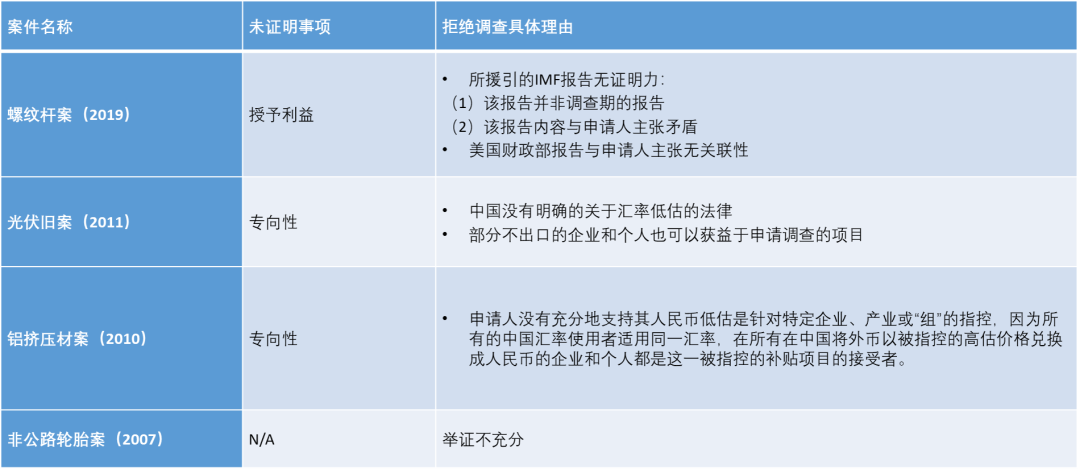
2010-2019被美国商务部驳回的人民币汇率低估反补贴调查申请
1.3 回顾
美国商务部驳回人民币汇率低估反补贴调查申请的理由:
未能证明汇率低估
未能证明汇率低估构成授予利益
未能证明专向性
2美国新规
2.1 修法历程
2019年5月,美国商务部发布修法提案,邀请各方提交评论意见。
截至2019年6月,47个利害关系方提交了评论意见。其中,17方持反对意见,包括美国财政部前助理副部长、美国商会、中国国际商会、金诚同达律师事务所、印度和巴西政府等;30方持支持意见,主要包括美国国内企业、律所及智库等。
2020年2月4日,美国商务部正式发布反补贴法修正案,4月6日起生效。
2.2 修法内容
新增汇率低估条款:规定汇率低估认定和利益计算的考虑因素
被调查企业母国在相关期限内存在汇率低估情形
存在导致汇率低估情形的政府行动
解读:回应螺杆案,为计算项目的补贴利益制定法律依据。
专向性条款修订:新增一款,明确“一组企业”界定
“从国际上购买或向国际销售的企业”可以构成“一组”企业
解读:总结铜版纸案和铝型材案的失败经验,扫除“专向性”上的法律障碍。
2.2.1 新规内容之一:新增关于汇率低估补贴项目的规定
要素一:Undervaluation
被调查企业母国在相关期限内存在汇率低估情形。
19 CFR § 351.528 (a) Currency undervaluation—(1) In general. The Secretary normally will consider whether a benefit is conferred from the exchange of United States dollars for the currency of a country under review or investigation under a unified exchange rate system only if that country’s currency is undervalued during the relevant period. In determining whether a country’s currency is undervalued, the Secretary normally will take into account the gap between the country’s real effective exchange rate (REER) and the real effective exchange rate that achieves an external balance over the medium term that reflects appropriate policies (equilibrium REER).
要素二:Contribution
存在导致汇率低估情形的政府行动。
19 CFR § 351.528 (2) Government action. The Secretary normally will make an affirmative finding under paragraph (a)(1) of this section only if there has been government action on the exchange rate that contributes to an undervaluation of the currency. In assessing whether there has been such government action, the Secretary will not normally include monetary and related credit policy of an independent central bank or monetary authority.
2.2.2 新规内容之二:专向性条款增加一款,明确“一组企业”的界定
1930年美国关税法第771(5A)(D)条关于专向性的规定没有具体界定何为“一组”企业或行业
以往案件中,美国商务部以申请人未充分支持被调查企业所在国汇率低估是针对特定企业、产业或“组”而拒绝调查
新规配合将汇率低估情形作为反补贴调查的事项而制定,使得提供给进行国际货物买卖的企业的补贴,或者进行国际货物买卖的企业为主要使用者的补贴,具有专向性
新规中“一组企业”的概念主要适用于国内补贴,而非出口补贴
19 CFR § 351. 502 Specificity of domestic subsidies. (c) Traded goods sector. In determining whether a subsidy is being provided to a “group” of enterprises or industries within the meaning of section 771(5A)(D) of the Act, the Secretary normally will consider enterprises that buy or sell goods internationally to comprise such a group.
2.2.3 IMF对美国新规的评价:动机很好,方法错误,结果危险
“11. Treating undervalued currencies as a countervailable subsidy represents a significant risk to the multilateral trade and international monetary systems.
While there have been longstanding concerns over the conduct of currency policy in some countries, the imposition of countervailing duties on imports from countries that are assessed to have an undervalued currency would hinder, rather than facilitate, efforts to address such concerns. The adoption of currency-based countervailing duties could lead to retaliation, to other countries replicating such policies with their own approach and methodologies, and to increased trade tensions. Finally, such an approach could stand in the way of a more effective dialogue over the underlying macro-structural distortions that are affecting external positions. Instead, the U.S. should work constructively with its trading partners to better address these underlying distortions.”
——IMF: United States of America: Staff Concluding Statement of the 2020 Article IV Mission
3新规实践
3.1 如何认定存在汇率低估(定性)
3.1.1 汇率低估
是否存在汇率波动/浮动
是否被IMF认定为汇率低估
是否被列入美国财政部汇率操纵或汇率政策监控名单
汇率政策是否缺乏透明度
3.1.2 可归因性
央行是否独立于政府
央行是否对外汇汇率进行管理
案例分析
越南轮胎案 + 中国扎口丝案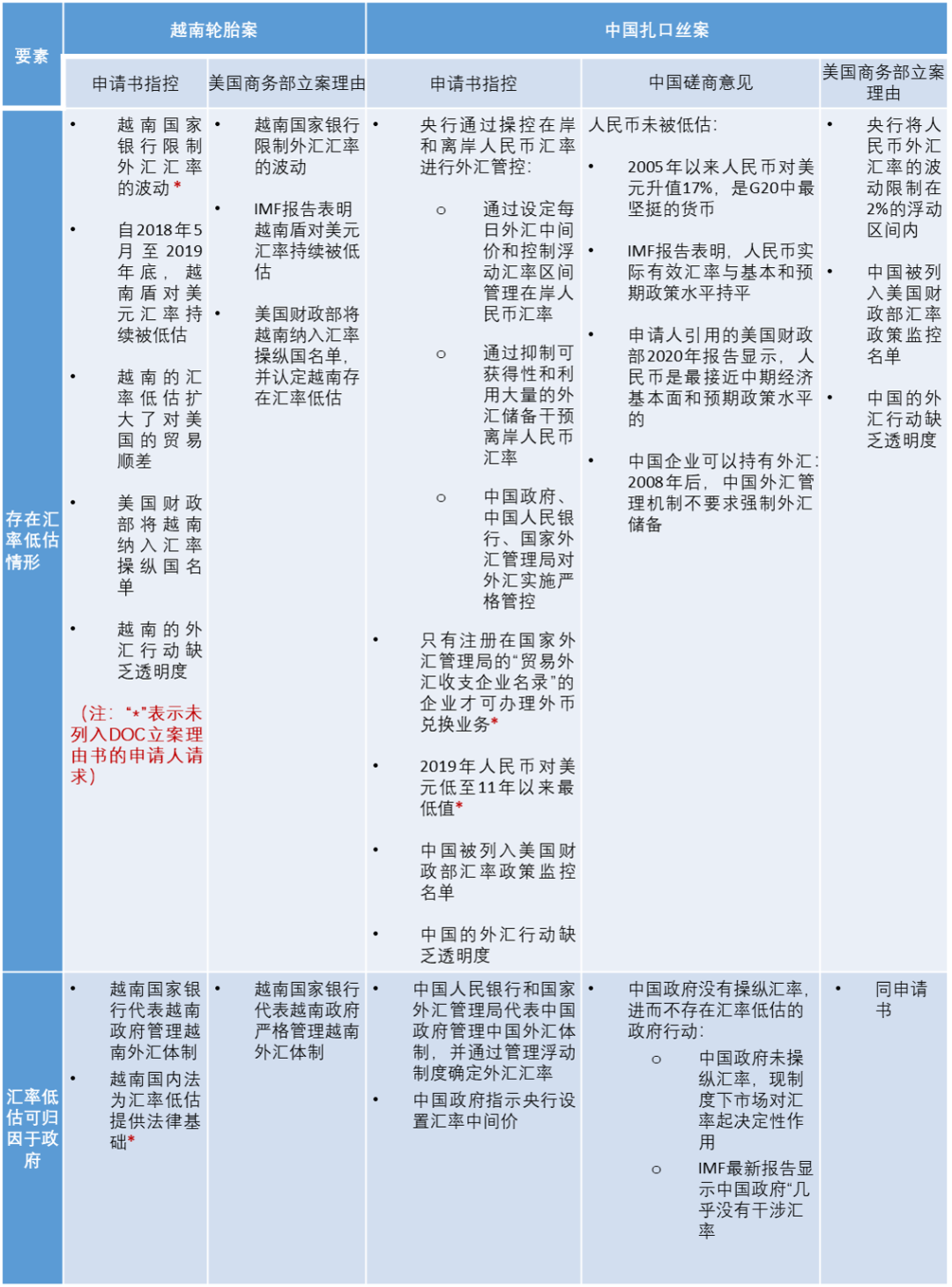
参考
IMF是如何认定汇率低估的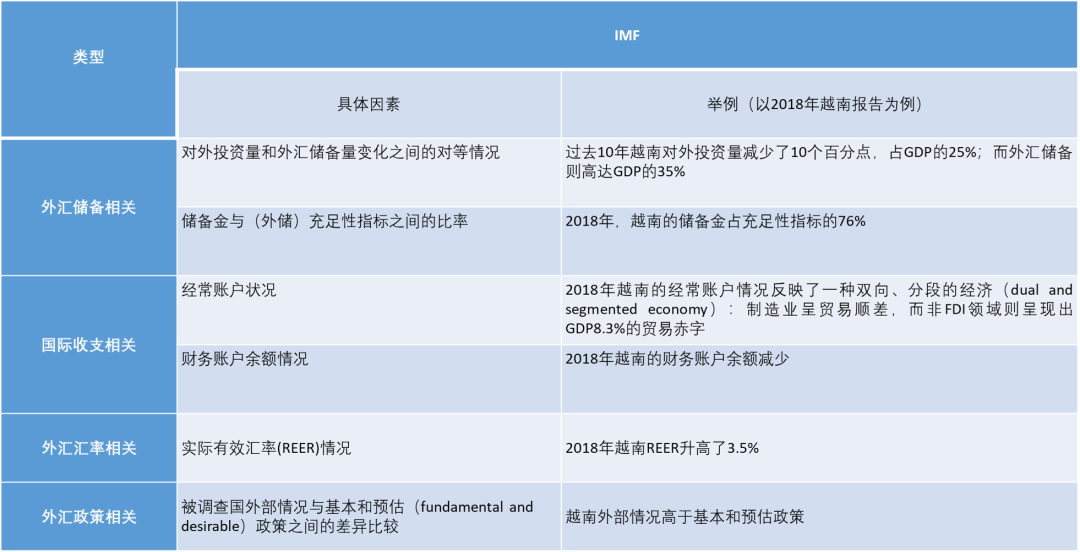
3.2 如何计算汇率低估的利益授予(定量)
案例分析
越南轮胎案 + 中国扎口丝案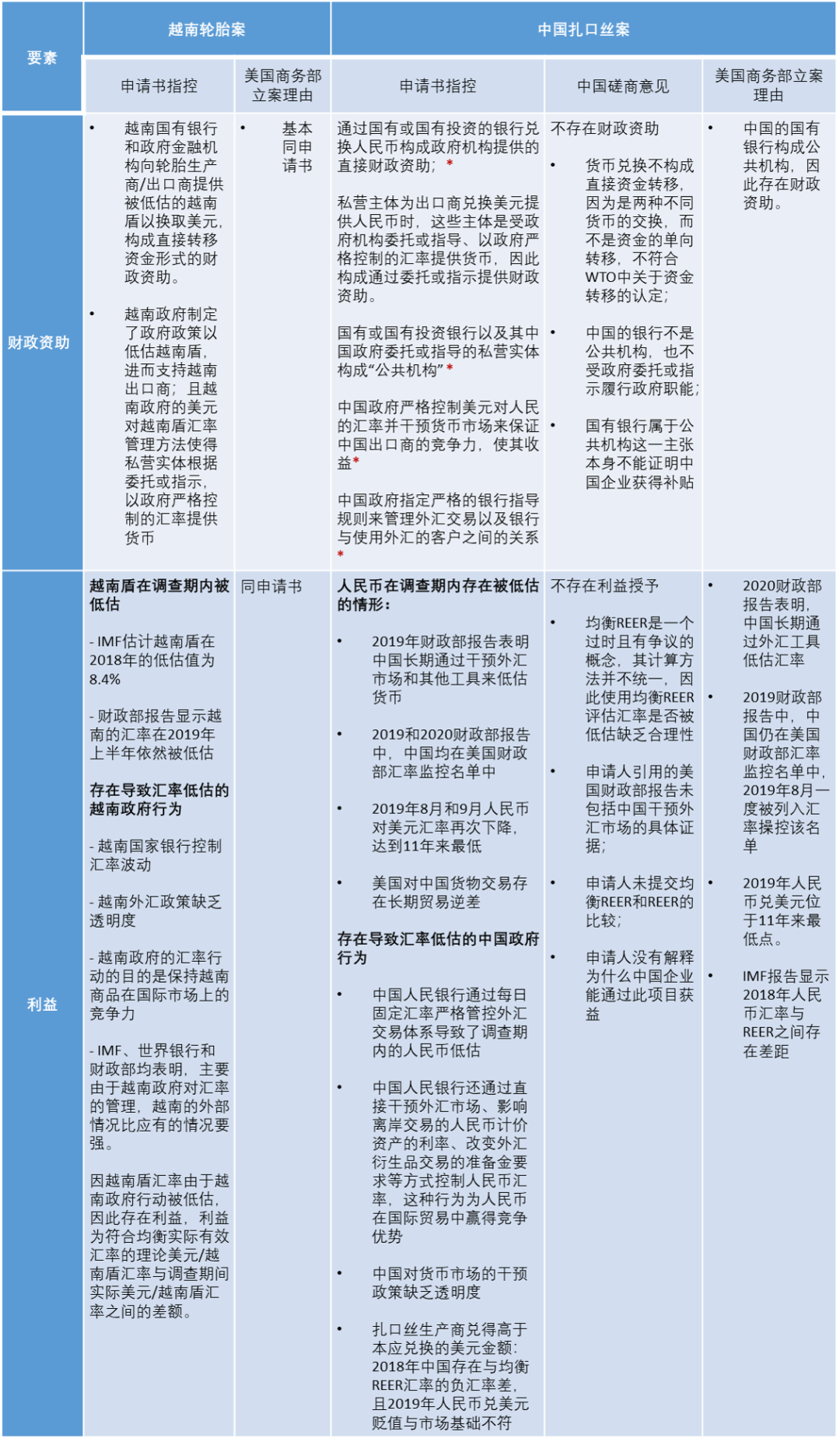
参考
IMF如何计算汇率低估
《CGER汇率评价方法》
IMF下设汇率问题顾问组(Consultative Group on Exchange Rate, CGER),作为汇率争端技术问题的官方机构。2006 年11 月出台的《CGER汇率评价方法》(Methodology for CGER Exchange Rate Assessments )提出了一套系统性汇率评价方法,包括三种互相补充的方法:宏观经济平衡法(Macroeconomic Balance Approach, MBA)、简化均衡实际汇率法(Equilibrium Real Exchange Rate Approach, ERER) 和外部可持续方法(External Sustainability Approach, ESA)。
3.3 如何认定专向性
出口使用外汇占全部外汇供应的比例
国际货物进出口对国际收支是否有“净积极”影响
案例分析
越南轮胎案 + 中国扎口丝案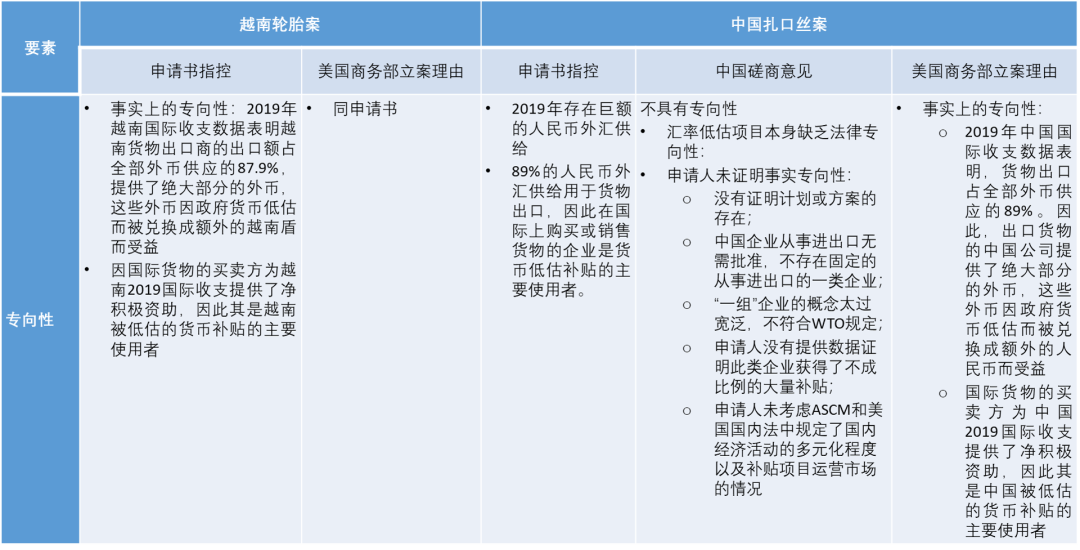
4合规分析
4.1 Jurisdiction
汇率低估归谁管 WTO vs. IMF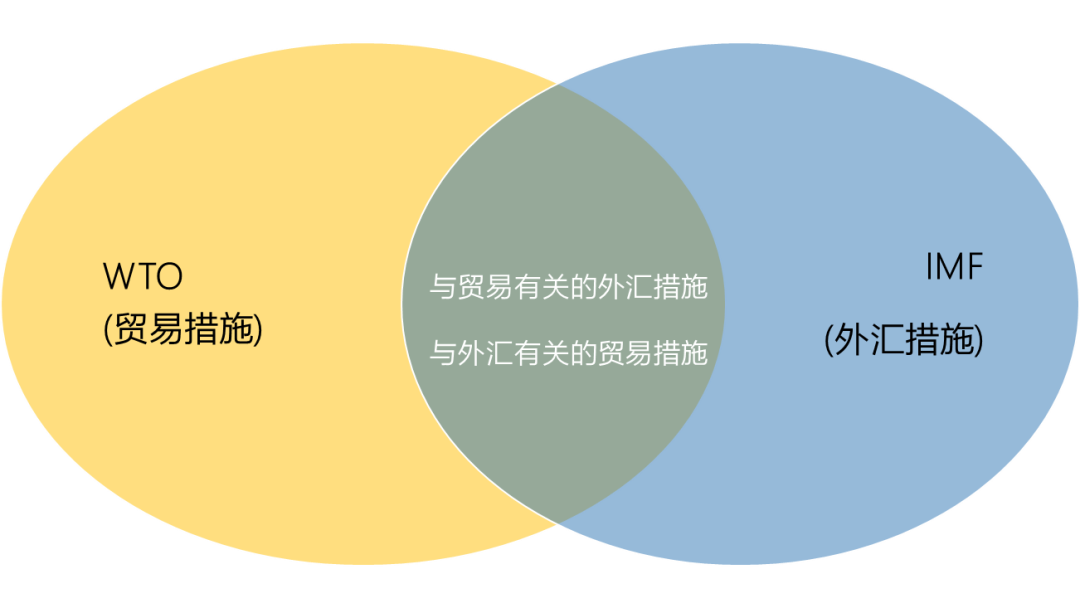
情形一
管辖权排他性属于WTO
情形二
管辖权排他性属于IMF
情形三
WTO与IMF均有管辖权,但二者管辖权的侧重点不同
- GATT规定
- WTO与IMF协定
- WTO补充资料
- WTO案例
GATT规定
GATT Article XV: Exchange Arrangements
1. The CONTRACTING PARTIES shall seek co-operation with the International Monetary Fund to the end that the CONTRACTING PARTIES and the Fund may pursue a co-ordinated policy with regard to exchange questions within the jurisdiction of the Fund and questions of quantitative restrictions and other trade measures within the jurisdiction of the CONTRACTING PARTIES.
1. 缔约方全体应谋求与IMF合作,以便缔约方全体与IMF在IMF所主管的外汇问题和缔约方全体所主管的数量限制或其他贸易措施方面,可以采取一种协调的政策。
GATT Article XV: Exchange Arrangements
9. Nothing in this Agreement shall preclude: (a) the use by a contracting party of exchange controls or exchange restrictions in accordance with the Articles of Agreement of the International Monetary Fund or with that contracting party’s special exchange agreement with the CONTRACTING PARTIES, or (b) the use by a contracting party of restrictions or controls in imports or exports, the sole effect of which, additional to the effects permitted under Articles XI, XII, XIII and XIV, is to make effective such exchange controls or exchange restrictions.
9. 本协定不妨碍:(甲)缔约国(方)实施与国际货币基金协定条款与缔约国(方)同缔约国(方)全体签订的外汇特别协定条款相符的外汇管制或外汇限制,或(乙)缔约国(方)对输出入实施某种除了产生本协定第十一条、第十二条、第十三条和第十四条所允许的影响以外,只是使外汇管制或外汇限制更加有效地限制或管制。
Reports Relating to the Review of the Agreement, GATT B.I S D.(3d Supp.)
GATT第15条第9款不能被理解为排除(GATT)缔约方全体与某一成员国讨论其外汇管制或限制措施对贸易产生的影响。
GATT Article XV: Exchange Arrangements
2. In all cases in which the CONTRACTING PARTIES are called upon to consider or deal with problems concerning monetary reserves, balances of payments or foreign exchange arrangements, they shall consult fully with the International Monetary Fund. In such consultations, the CONTRACTING PARTIES shall accept all findings of statistical and other facts presented by the Fund relating to foreign exchange, monetary reserves and balances of payments, and shall accept the determination of the Fund as to whether action by a contracting party in exchange matters is in accordance with the Articles of Agreement of the International Monetary Fund, or with the terms of a special exchange agreement between that contracting party and the CONTRACTING PARTIES. ……
2. 缔约方全体如果被请求考虑或处理有关货币储备、国际收支或外汇安排的问题,它们应与国际货币基金进行充分的协商。缔约方全体在协商中应接受基金提供的有关外汇、货币储备或国际收支的一切统计或其他调查结果;关于一缔约方在外汇问题上采取的行动是否符合国际货币基金协定的条款,是否符合这一缔约方与缔约方全体之间所签订的外汇特别协定的条件,缔约方全体也应接受基金的判定。……
IMF与WTO规定
IMF与WTO协定(Agreement between the IMF and the WTO (1996))
WTO与IMF应当就对方管辖的事项互相寻求意见。
para. 10: The Fund’s staff shall consult with the WTO Secretariat on issues of possible inconsistency between measures under discussion with a common member and that member’s obligations under the WTO Agreement. The WTO Secretariat shall consult with the Fund’s staff on issues of possible inconsistency between measures under discussion with a common member and that member’s obligations under the Fund’s Articles of Agreement.
WTO补充资料
1953年日内瓦讨论上形成的GATT analytical index
IMF具有就外汇问题提供事实或发表意见的权能。
“it seems … that there is a real difference here between saying matters within the jurisdiction of the Fund, which relates … strictly to the powers the Fund has, whereas matters within the competence of the Fund are matters on which the Fund, by reason of the subject matter which it deals with, is competent to provide the facts or to express an opinion. As one might say in a Government department … which has certain legal powers in relation to a part of its field and no powers in another, certain things are within the jurisdiction of that government department, but a great many more are within its competence.”
1984年东京回合第14次会议
缔约方全体确认,IMF的工作中应当包含外汇市场的不稳定性对国际贸易的影响,双方应当就此问题进一步交换意见。
“……they urge that their concern regarding the relationship between exchange market instability and international trade be taken into account in ongoing efforts within the International Monetary Fund to review the operation of the international monetary system with a view to possible improvements and agree that they will keep under consideration through further exchanges of views the relationship between exchange market instability and trade.”
WTO案例
Argentina – Textiles and Apparel
上诉机构确认GATT第15.2条要求(requires)专家组就外汇安排问题与IMF进行协商,但专家组随后认为该案涉措施不属于第15.2条规制的内容。
India – Quantitative Restrictions/Dominican Republic – Import and Sale of Cigarettes
专家组均就就相关问题与IMF进行了协商,理由是因为其需要就案涉外汇费用措施的法律性质寻求更多信息(Dominican Republic – Import and Sale of Cigarettes),或GATT第15.2条授权(entitles)其与IMF进行协商(India – Quantitative Restrictions)。
但是,专家组均在不同程度上回避了与IMF的协商是否具有强制性的问题。
讨论
如果WTO与IMF均有管辖权,如何划分二者的管辖权?
如果WTO有一定管辖权,其在GATT第15.2条下的义务是否适用于成员国?
4.2 Countervailability
汇率低估可否被反补贴调查
如果汇率低估补贴属于可诉性补贴,其是否符合ASCM关于可诉性补贴的要件:
政府或公共机构:提供财政资助的主体的认定
财政资助:汇率低估是否属于资金的直接转让
授予利益:汇率低估是否必然存在利益
专向性:获得“汇率低估补贴”的企业的范围是否存在明确界限
所谓汇率低估补贴受益的范围:
汇率低估补贴属于出口补贴的情形下利益范围的确定
汇率低估补贴属于国内补贴的情形下利益范围的确定
美国反补贴调查汇率低估项目的法律分析
作者:彭俊来源:金诚同达

2020年7月29日下午,清华大学国际争端解决研究院和中欧经贸咨询委员会联合主办的“补贴与反补贴规则(视频)研讨会”召开。