
引言
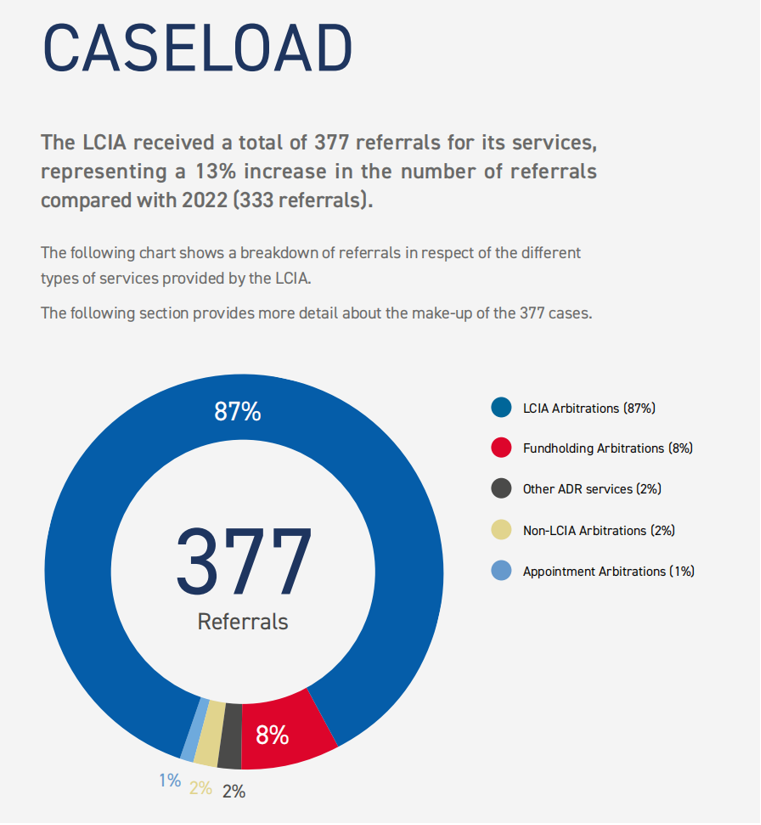
国际商事仲裁凭借高度意思自治、高效程序、专业裁决及其终局性,已成为商事主体在国际贸易中不可或缺的争议解决方式。作为规范英国仲裁实践的重要法律之一,1996年英国《仲裁法》(Arbitration Act 1996)自颁布施行以来,极大地促进了英格兰、威尔士及北爱尔兰仲裁活动的发展,特别为包括伦敦国际仲裁法院(London Court of International Arbitration,以下简称LCIA)在内的众多英国法律服务机构的成功提供了有力支持。据LCIA发布的《2023年度案例工作报告》(Annual Casework Report 2023)显示,2023年LCIA共审理377起仲裁案件,较2017年同期增长近六成。尽管近年来受新冠肺炎疫情影响,仲裁案件在个别年份有所下降,但过去十年间总体仍呈现稳步增长趋势。
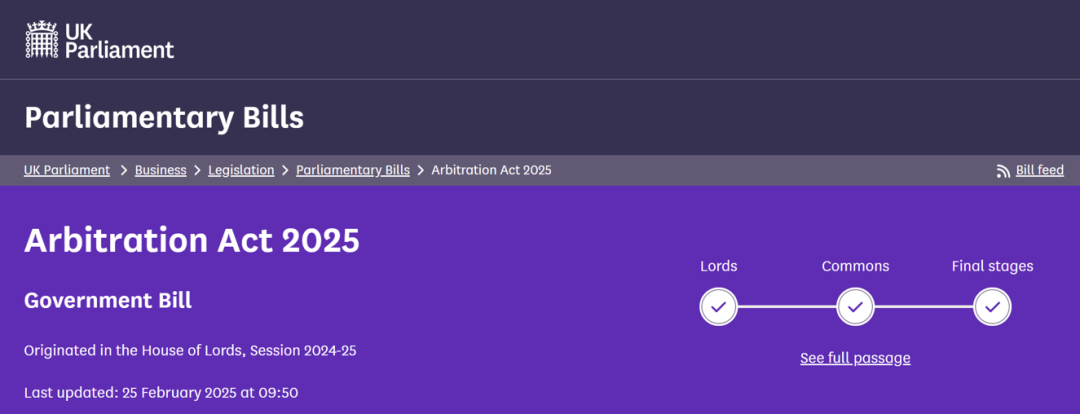
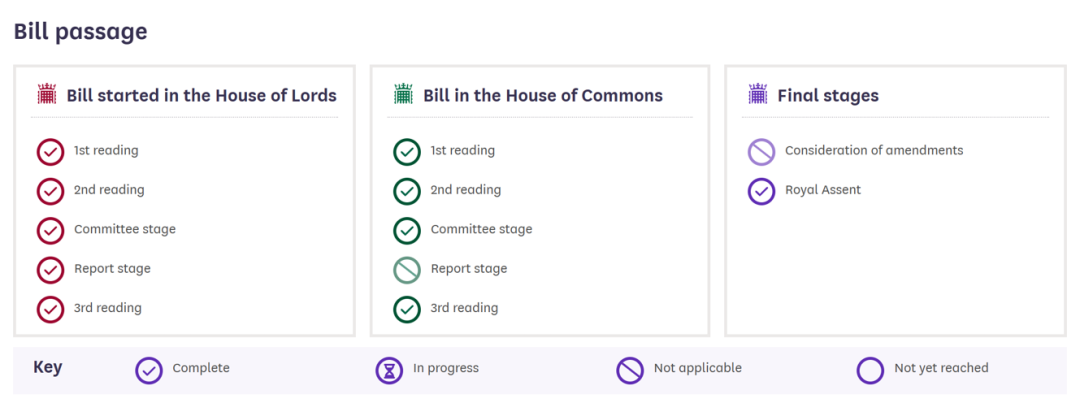
然而,尽管1996年《仲裁法》展现了较强的稳定性和良好运行效果,部分个人与组织仍建议对部分条款予以修订,以更好地满足经济社会发展的需求。经英国政府要求对该法案进行审查并经过两轮公众磋商后,英国法律委员会(Law Commission)于2023年11月21日向议会提交了修正草案,标志着这部施行近三十年的法律将迎来重大变革。2025年2月24日,2025年英国《仲裁法》(Arbitration Act 2025)在议会三读通过并获得皇室御准,自此正式生效。
一、2025年英国《仲裁法》第6A条的面世
在传统的仲裁法律框架中,仲裁协议的适用法律常常成为一个复杂且充满争议的问题。根据学理通说,仲裁协议的适用是指根据某一特定法域内的实体法或法律冲突规则来确定仲裁协议的有效性的问题。对于国际仲裁而言,仲裁协议的适用法律不仅关系到仲裁程序的选择,还涉及到准据法的适用及各方当事人意图的体现。仲裁协议的法律适用通常依赖于当事人事先达成的协议,但在缺乏明确约定时,适用法律的问题则成为仲裁中一个具有挑战性的难题。
事实上,1996年《仲裁法》并未对仲裁协议的适用法律作出明确规定,这一立法空白直到英国最高法院2012年作出Sulamérica v Enesa案判决才予以填补。该案系保险协议纠纷,双方当事人约定伦敦为仲裁地,主合同适用巴西法,但未明确仲裁协议的准据法。英国最高法院认为在缺乏明示选择的情况下,应首先判断当事人是否通过默示方式选择了仲裁协议的准据法;若无默示选择,则适用与仲裁协议最密切相关的法律。最终,英国最高法院认为尽管主合同适用巴西法,但适用该法可能影响当事人的仲裁意图,因此不应推定当事人默示选择巴西法,而应适用仲裁地法,即英国法。2020年,英国最高法院在Enka v Chubb案中继承并发展了2012年Sulamérica v Enesa案的精神,进一步完善和明晰了仲裁协议准据法的确定方式。Enka v Chubb案确立了“三步走”的选法模式,即首先考虑当事人是否明示选择仲裁协议冲突法;若无,则判断是否可推定其默示选择,通常会关注主合同准据法,除非有特殊情况;若仍无法确定,则适用与仲裁协议最密切相关的法律,通常为仲裁地法。
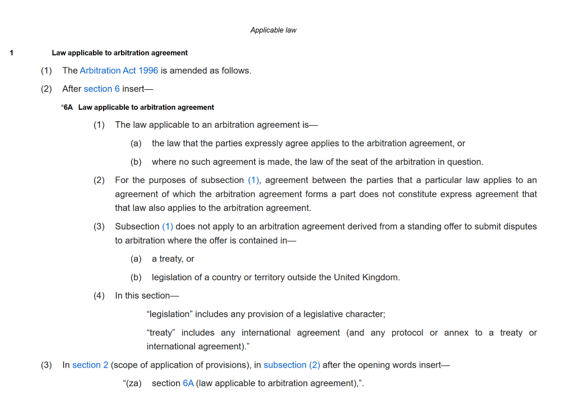
2025年《仲裁法》的修订系对这一问题进行了针对性总结与完善。根据新修订的《仲裁法》第6A条款,仲裁协议的法律适用应优先遵循当事人的明确约定;如果当事人没有明确约定仲裁协议的适用法律,则应适用仲裁地的法律。这一修订的核心目的是解决仲裁协议适用法律的确定性问题,避免因法律选择不明确而产生的潜在争议。
二、2025年英国《仲裁法》第6A条的革新
2025年《仲裁法》的修订针对仲裁协议适用法律的规定,带来了两大显著的变革:
(一)明确仲裁协议的适用法律规则
根据修订后的第6A条款,仲裁协议的适用法律规则得到了明确规定。当事人可以自由选择适用于仲裁协议的法律,但如果双方未作明确约定,仲裁协议的适用法律将默认是仲裁地的法律。这一规定解决了当事人在国际仲裁中常常面临的“适用法律不明确”问题。对于国际仲裁而言,这种明确性增强了各方对仲裁裁决的预期一致性,也减少了因法律适用产生的司法冲突。
通过这一修订,英国进一步增强了仲裁地法与仲裁协议法律适用之间的一致性,避免了在跨境仲裁中可能出现的适用法律冲突,保证了程序的稳定性和可预测性。这一创新在国际仲裁领域具有重要意义,尤其是在复杂的跨境商业争端中,能够为当事人提供更加明确的法律保障。
(二)对于“仲裁协议与主协议之间的法律适用关系”的澄清
此次修订还明确了仲裁协议与其所附的主合同之间法律适用的关系,充分彰显了仲裁协议的独立性原则。新法明确规定,仲裁协议适用的法律不必与主合同相同。在当事人没有明确选择适用法律的情况下,仲裁协议的适用法律将由仲裁地法决定,而主合同的适用法律则仍然根据合同条款的规定来适用。这一澄清对于跨国企业来说尤为重要,因为他们经常面临不同法域下多重法律适用的问题。
这种灵活性使得当事人在选择仲裁地时不必过于担心仲裁协议与主合同之间法律适用不一致的风险,进一步增强了仲裁协议适用法律的操作性和灵活性。这种“灵活选择”的安排也为国际仲裁带来了更多的法律确定性和程序的简便性。
三、2025年英国《仲裁法》第6A条对国际仲裁的积极影响
(一)推动英国仲裁中心地位的进一步提升
通过对仲裁协议适用法律的细化和明确,2025年英国仲裁法的修订无疑提升了英国在全球仲裁领域的中心地位。明确的法律适用规则不仅为国际当事人提供了更多的法律保障,也进一步吸引了全球范围内的争议解决者选择英国作为仲裁地。英格兰和威尔士的仲裁体系一向以其公正性、透明性和高效性著称,2025年的修订在此基础上进一步强化了其在全球仲裁市场中的竞争力。
(二)减少仲裁过程中的法律冲突与不确定性
在国际仲裁中,法律冲突是常见的问题之一。尤其是在当事人没有明确约定适用法律时,不同法域的法律冲突可能会影响仲裁程序的顺利进行。通过修订2025年《仲裁法》,英国进一步简化了法律适用的规则,减少了因法律选择不明确而产生的争议。这为仲裁实践提供了更加明确的法律框架,使得仲裁程序更加高效、公正,并增强了仲裁裁决的可执行性。
(三)促进全球仲裁制度的一致性与规范化
此次修订对仲裁协议法律适用问题的明确规定,不仅对英国的仲裁体系产生深远影响,也有助于推动全球仲裁制度的一致性和规范化。随着国际仲裁领域不断发展和各国仲裁法不断完善,仲裁协议适用法律的明确化为全球仲裁提供了一个重要的示范。各国在修订本国仲裁法时,或许会参考英国的这一新规定,以提高国际仲裁实践中的统一性和预见性。
四、2025年英国《仲裁法》第6A条的批判性解读
尽管2025年《仲裁法》的修订在很多方面都具有积极意义,但也不可避免地存在一些潜在的局限性。笔者认为,2025年《仲裁法》第6A条面临的最大挑战就是是否在特定情况下会构成对当事人意思自治的潜在限制。
毋庸置疑的是,探讨仲裁协议法律适用问题的前提是当事人未就仲裁协议的法律适用作出明示安排,因为世界各国法律及相关国际条约几乎普遍允许当事人自行选择仲裁协议的适用法律。只有在当事人未明确仲裁协议的适用法律时,法律或者仲裁规则指定方才具有正当性。但是以2025年《仲裁法》第6A条这种法定形式径直确定适用何种法律是否有违或者扭曲仲裁的意思自治原则,答案是存疑的。一方面,仲裁协议作为主合同的组成部分,与主合同存在紧密的法律和经济联系。尽管在现代国际仲裁中,“仲裁协议独立性原则”被广泛接受,即仲裁协议在法律上独立于主合同,可以单独适用不同的法律,但这并不意味着仲裁协议的适用法律可以完全脱离主合同的法律环境。在许多情况下,仲裁协议与主合同的内容、条款解释、合同履行背景等因素密不可分。另一方面,虽然仲裁协议通常与仲裁地联系最紧密,但是这种联系并不总是必然的。虽然2025年《仲裁法》第6A条采用仲裁地标准可以提高了仲裁裁决的可预测性和仲裁程序的稳定性,但是也在一定程度上导致了连结点僵化的问题。强制适用仲裁地法不仅可能违背当事人意愿,同样也会剥夺仲裁庭与法院更多的自由裁量权,这些都会间接导致削弱仲裁的灵活性。
五、结语
2025年英国《仲裁法》的修订通过明确仲裁协议适用法律的规则,为国际仲裁提供了更加清晰的法律框架,增强了仲裁程序的透明度和可预测性。然而,这一修订也面临着一定的局限性和挑战,特别是在保障当事人意思自治方面。尽管如此,英国仲裁法修订无疑为国际商事仲裁提供了更加稳定的法律基础,未来随着仲裁法的不断完善,英国有望继续在全球仲裁市场中占据重要地位,为全球争端解决机制的完善和发展做出贡献。
Innovation in the Applicable Law for Arbitration Agreements:A Commentary on Section 6A of UK Arbitration Act 2025
Introduction
International commercial arbitration—characterized by a high degree of party autonomy, efficient procedures, professional adjudication, and finality of the award—has become an indispensable dispute resolution mechanism in international trade. As one of the principal statutory frameworks governing arbitration practice in the United Kingdom, the Arbitration Act 1996 has significantly fostered the development of arbitration proceedings in England, Wales, and Northern Ireland since its enactment. In particular, it has underpinned the success of numerous UK legal institutions, including the London Court of International Arbitration (LCIA). According to LCIA’s Annual Casework Report 2023, the LCIA received 377 arbitration cases in 2023—a nearly 60% increase compared to the same period in 2017. Although the number of cases experienced occasional declines in specific years due to the impact of the COVID-19 pandemic, the overall trend over the past decade has been one of steady growth.
Although the Arbitration Act 1996 has shown great stability and has been operating well since its implementation, some individuals and organizations still propose to amend some of its contents to meet the needs of economic and social development. After the UK government requested a review of the Act and two rounds of public consultations, the Law Commission introduced the Arbitration Bill into Parliament on 21 November 2023—signaling a major overhaul of a law that had been in force for nearly three decades. On 24 February 2025, the Arbitration Act 2025 was passed at the third reading in Parliament and received Royal Assent, thereby coming into force.
I、The Emergence of Section 6A in the Arbitration Act 2025
Within the traditional framework of arbitration law, determining the applicable law for arbitration agreements has long been a complex and contentious issue. Scholarly consensus defines this issue as one concerning the validity of an arbitration agreement determined by the substantive law or conflict-of-law rules of a given jurisdiction. In the context of international arbitration, the choice of law governing the arbitration agreement not only affects the procedural aspects but also engages conflict-of-law principles and reflects the true intentions of the parties. Typically, the applicable law is determined by the parties’ prior agreement; however, in the absence of an express choice, the issue of applicable law becomes particularly challenging.
In fact, the Arbitration Act 1996 did not expressly address the question of which law should govern arbitration agreements. This legislative gap was eventually filled by the UK Supreme Court in the 2012 Sulamérica v Enesa decision. In that insurance contract dispute, although the parties had agreed to designate London as the seat of arbitration and the main contract was governed by Brazilian law, no explicit choice was made regarding the conflict-of-law rules for the arbitration agreement. The Supreme Court held that, in the absence of an express choice, one should first examine whether the parties had implicitly chosen a particular conflict-of-law regime; failing that, the law most closely connected to the arbitration agreement should be applied. Consequently, despite the main contract being subject to Brazilian law, applying that law might have undermined the parties’ arbitration intent, so the seat’s law—in this case, English law—was adopted. In 2020, the Supreme Court reaffirmed and developed this approach in Enka v Chubb by further refining the methodology for determining the applicable law for arbitration agreements. The decision established a “three-step” framework: first, consider whether the parties have expressly chosen a governing law; if not, assess whether an implied choice can be inferred (often by reference to the law governing the main contract, unless exceptional circumstances exist); and if no determination can be made, apply the law most closely connected to the arbitration agreement, which is usually the law of the seat.
The amendments embodied in the Arbitration Act 2025 specifically address this issue. Under the revised Section 6A, the governing law of an arbitration agreement shall primarily be determined by the parties’ express choice; failing that, the law of the seat will apply. The core objective of this amendment is to resolve uncertainties regarding the applicable law for arbitration agreements and to avert potential disputes arising from ambiguous legal choices.
Ⅱ、Innovations Introduced by Section 6A of the Arbitration Act 2025
The Arbitration Act 2025 introduces two major innovations regarding the determination of the applicable law for arbitration agreements:
(A) Clarification of the Applicable Law for Arbitration Agreements
Under the revised Section 6A, the rule governing the applicable law for arbitration agreements has been clearly defined. While parties remain free to choose the law that will govern their arbitration agreement, in the absence of such an express selection, the law of the seat will automatically govern the agreement. This provision resolves the frequent issue in international arbitration of uncertainty over the applicable law, thereby enhancing predictability regarding arbitral awards and reducing judicial conflicts arising from divergent legal applications. By harmonizing the law of the seat with the legal regime governing the arbitration agreement, the amendment minimizes potential conflicts in cross-border arbitration and ensures procedural stability and predictability—an innovation of considerable significance in complex international commercial disputes.
(B) Clarification of the Relationship Between the Arbitration Agreement and the Main Contract
Section 6A further clarifies the relationship between the law governing the arbitration agreement and that governing the main contract, thereby reinforcing the principle of the separability of the arbitration clause. The new legislation explicitly provides that the law applicable to the arbitration agreement need not coincide with that governing the main contract. In cases where the parties have not made an express choice, the arbitration agreement will be governed by the law of the seat, while the main contract will continue to be governed by the law stipulated in its own terms. This distinction is particularly crucial for multinational enterprises, which often face the challenge of multiple legal regimes. Such flexibility alleviates concerns about potential conflicts between the laws applicable to the arbitration agreement and the main contract, thereby enhancing the practical operability and adaptability of the arbitration framework and further promoting legal certainty and procedural simplicity in international arbitration.
Ⅲ、Impact of Section 6A of the Arbitration Act 2025 on International Arbitration
(A) Enhancing the United Kingdom’s Status as an Arbitration Hub
By providing a more detailed and clear rule on the applicable law for arbitration agreements, the 2025 amendments undoubtedly strengthen the United Kingdom’s position as a premier center for international arbitration. The clarity afforded by these rules not only offers greater legal certainty for international parties but also attracts dispute resolution practitioners from around the world to select the UK as the seat of arbitration. The arbitration system in England and Wales has long been renowned for its fairness, transparency, and efficiency, and the recent amendments further reinforce its competitive edge in the global arbitration market.
(B) Reducing Legal Conflicts and Uncertainties in the Arbitral Process
Legal conflicts are a common issue in international arbitration, particularly when parties have not explicitly agreed on the governing law. Divergences between the laws of different jurisdictions can impede the smooth progress of arbitral proceedings. By simplifying and clarifying the applicable law rules in the Arbitration Act 2025, UK has mitigated such disputes, thereby establishing a more predictable legal framework that enhances the efficiency and fairness of the arbitral process and bolsters the enforceability of arbitral awards.
(C) Promoting Consistency and Harmonization in Global Arbitration Regimes
The explicit provisions on the applicable law for arbitration agreements contained in the Arbitration Act 2025 not only have a profound impact on the UK arbitration system but also serve as an important model for global arbitration practices. As international arbitration continues to evolve and as various jurisdictions refine their own arbitration laws, the clarity provided by the UK’s approach may well influence other countries to adopt similar measures, thereby promoting greater uniformity and predictability in international arbitration.
Ⅳ、Critical Analysis of Section 6A of the Arbitration Act 2025
While the amendments introduced by the Arbitration Act 2025 have many positive aspects, they are not without potential drawbacks. The most significant concern is whether, in certain circumstances, Section 6A might unduly restrict party autonomy. It is undeniable that the issue of the applicable law for an arbitration agreement arises only when the parties have not made an express selection—given that both domestic laws and international treaties generally permit parties to choose the governing law. In the absence of such a choice, the imposition of a statutory rule is justified. However, the statutory determination provided by Section 6A raises questions as to whether it might, in certain cases, conflict with or distort the principle of party autonomy in arbitration. On the one hand, as an integral part of the main contract, the arbitration agreement is inherently linked to the legal and economic context of the main contract. Even though the principle of separability is widely accepted in modern international arbitration—allowing the arbitration agreement to be governed by a law different from that of the main contract—this does not imply that the applicable law for the arbitration agreement can be completely divorced from the legal environment of the main contract. In many instances, the content, interpretation, and background of the main contract are inextricably connected with the arbitration clause. On the other hand, although the arbitration agreement is typically associated with the law of the seat, this connection is not absolute. While adopting the law of the seat as the default rule enhances the predictability of arbitral awards and the stability of the arbitration process, it may also result in a certain rigidity regarding the connection factors. Mandating the application of the seat’s law might not only run counter to the parties’ true intentions but could also constrain the discretionary power of both the arbitral tribunal and the courts, thereby indirectly diminishing the flexibility of arbitration.
Ⅴ、Conclusion
By clearly delineating the applicable law for arbitration agreements, the Arbitration Act 2025 establishes a more transparent and predictable legal framework for international arbitration. Although these changes also bring certain limitations and challenges—particularly with respect to safeguarding party autonomy—they undoubtedly provide a more robust legal foundation for international commercial arbitration. With further refinements to arbitration law in the future, UK is well positioned to maintain its pivotal role in the global arbitration arena and to contribute significantly to the evolution and improvement of international dispute resolution mechanisms.
参考文献(中文文献)
[1] 郭潇晗:《论国际商事仲裁协议的法律适用》,载《商事仲裁与调解》2022年第6期。
[2] 寇丽:《现代国际商事仲裁法律适用问题研究》,中国政法大学2004年博士学位论文。
[3] 张洪扬:《国际商事仲裁协议准据法确定方法的反思与改进》,吉林大学2024年硕士学位论文。
参考文献(英文文献)
[1] Arbitration Act 1996
[2] Arbitration Act 2025
[3] Blackaby N, Partasides C and Redfern A, Redfern and Hunter on International Arbitration (7th edn, OUP 2022)
[4] Enka Insaat Ve Sanayi AS v OOO Insurance Company Chubb [2020] UKSC 38
[5] Halliburton Co v Chubb Bermuda Insurance Ltd [2020] UKSC 48 [108]
[6] Law Commission, Review of the Arbitration Act 1996: Final report and Bill (Law Com CP No 413, 2023)
[8] Law Commission, Review of the Arbitration Act 1996: Responses to the First Consultation Paper (Law Com CP No 257, 2022)
[9] Law Commission, Review of the Arbitration Act 1996: Responses to the Second Consultation Paper (Law Com CP No 258, 2023)
[10] LCIA, ‘Annual Casework Report 2022’ (London, 2023)accessed 4 December 2023 7-9
[11] Nazzini R, The Law Applicable to The Arbitration Agreement: Towards Transnational Principles (2016) 65 ICLQ
[12] Sulamérica Cia Nacional de Seguros SA and ors v Enesa Engenharia SA and ors [2012] EWCA Civ 638
国际商事仲裁凭借高度意思自治、高效程序、专业裁决及其终局性,已成为商事主体在国际贸易中不可或缺的争议解决方式。作为规范英国仲裁实践的重要法律之一,1996年英国《仲裁法》(Arbitration Act 1996)自颁布施行以来,极大地促进了英格兰、威尔士及北爱尔兰仲裁活动的发展,特别为包括伦敦国际仲裁法院(London Court of International Arbitration,以下简称LCIA)在内的众多英国法律服务机构的成功提供了有力支持。据LCIA发布的《2023年度案例工作报告》(Annual Casework Report 2023)显示,2023年LCIA共审理377起仲裁案件,较2017年同期增长近六成。尽管近年来受新冠肺炎疫情影响,仲裁案件在个别年份有所下降,但过去十年间总体仍呈现稳步增长趋势。
然而,尽管1996年《仲裁法》展现了较强的稳定性和良好运行效果,部分个人与组织仍建议对部分条款予以修订,以更好地满足经济社会发展的需求。经英国政府要求对该法案进行审查并经过两轮公众磋商后,英国法律委员会(Law Commission)于2023年11月21日向议会提交了修正草案,标志着这部施行近三十年的法律将迎来重大变革。2025年2月24日,2025年英国《仲裁法》(Arbitration Act 2025)在议会三读通过并获得皇室御准,自此正式生效。
一、2025年英国《仲裁法》第6A条的面世
在传统的仲裁法律框架中,仲裁协议的适用法律常常成为一个复杂且充满争议的问题。根据学理通说,仲裁协议的适用是指根据某一特定法域内的实体法或法律冲突规则来确定仲裁协议的有效性的问题。对于国际仲裁而言,仲裁协议的适用法律不仅关系到仲裁程序的选择,还涉及到准据法的适用及各方当事人意图的体现。仲裁协议的法律适用通常依赖于当事人事先达成的协议,但在缺乏明确约定时,适用法律的问题则成为仲裁中一个具有挑战性的难题。
事实上,1996年《仲裁法》并未对仲裁协议的适用法律作出明确规定,这一立法空白直到英国最高法院2012年作出Sulamérica v Enesa案判决才予以填补。该案系保险协议纠纷,双方当事人约定伦敦为仲裁地,主合同适用巴西法,但未明确仲裁协议的准据法。英国最高法院认为在缺乏明示选择的情况下,应首先判断当事人是否通过默示方式选择了仲裁协议的准据法;若无默示选择,则适用与仲裁协议最密切相关的法律。最终,英国最高法院认为尽管主合同适用巴西法,但适用该法可能影响当事人的仲裁意图,因此不应推定当事人默示选择巴西法,而应适用仲裁地法,即英国法。2020年,英国最高法院在Enka v Chubb案中继承并发展了2012年Sulamérica v Enesa案的精神,进一步完善和明晰了仲裁协议准据法的确定方式。Enka v Chubb案确立了“三步走”的选法模式,即首先考虑当事人是否明示选择仲裁协议冲突法;若无,则判断是否可推定其默示选择,通常会关注主合同准据法,除非有特殊情况;若仍无法确定,则适用与仲裁协议最密切相关的法律,通常为仲裁地法。
2025年《仲裁法》的修订系对这一问题进行了针对性总结与完善。根据新修订的《仲裁法》第6A条款,仲裁协议的法律适用应优先遵循当事人的明确约定;如果当事人没有明确约定仲裁协议的适用法律,则应适用仲裁地的法律。这一修订的核心目的是解决仲裁协议适用法律的确定性问题,避免因法律选择不明确而产生的潜在争议。
二、2025年英国《仲裁法》第6A条的革新
2025年《仲裁法》的修订针对仲裁协议适用法律的规定,带来了两大显著的变革:
(一)明确仲裁协议的适用法律规则
根据修订后的第6A条款,仲裁协议的适用法律规则得到了明确规定。当事人可以自由选择适用于仲裁协议的法律,但如果双方未作明确约定,仲裁协议的适用法律将默认是仲裁地的法律。这一规定解决了当事人在国际仲裁中常常面临的“适用法律不明确”问题。对于国际仲裁而言,这种明确性增强了各方对仲裁裁决的预期一致性,也减少了因法律适用产生的司法冲突。
通过这一修订,英国进一步增强了仲裁地法与仲裁协议法律适用之间的一致性,避免了在跨境仲裁中可能出现的适用法律冲突,保证了程序的稳定性和可预测性。这一创新在国际仲裁领域具有重要意义,尤其是在复杂的跨境商业争端中,能够为当事人提供更加明确的法律保障。
(二)对于“仲裁协议与主协议之间的法律适用关系”的澄清
此次修订还明确了仲裁协议与其所附的主合同之间法律适用的关系,充分彰显了仲裁协议的独立性原则。新法明确规定,仲裁协议适用的法律不必与主合同相同。在当事人没有明确选择适用法律的情况下,仲裁协议的适用法律将由仲裁地法决定,而主合同的适用法律则仍然根据合同条款的规定来适用。这一澄清对于跨国企业来说尤为重要,因为他们经常面临不同法域下多重法律适用的问题。
这种灵活性使得当事人在选择仲裁地时不必过于担心仲裁协议与主合同之间法律适用不一致的风险,进一步增强了仲裁协议适用法律的操作性和灵活性。这种“灵活选择”的安排也为国际仲裁带来了更多的法律确定性和程序的简便性。
三、2025年英国《仲裁法》第6A条对国际仲裁的积极影响
(一)推动英国仲裁中心地位的进一步提升
通过对仲裁协议适用法律的细化和明确,2025年英国仲裁法的修订无疑提升了英国在全球仲裁领域的中心地位。明确的法律适用规则不仅为国际当事人提供了更多的法律保障,也进一步吸引了全球范围内的争议解决者选择英国作为仲裁地。英格兰和威尔士的仲裁体系一向以其公正性、透明性和高效性著称,2025年的修订在此基础上进一步强化了其在全球仲裁市场中的竞争力。
(二)减少仲裁过程中的法律冲突与不确定性
在国际仲裁中,法律冲突是常见的问题之一。尤其是在当事人没有明确约定适用法律时,不同法域的法律冲突可能会影响仲裁程序的顺利进行。通过修订2025年《仲裁法》,英国进一步简化了法律适用的规则,减少了因法律选择不明确而产生的争议。这为仲裁实践提供了更加明确的法律框架,使得仲裁程序更加高效、公正,并增强了仲裁裁决的可执行性。
(三)促进全球仲裁制度的一致性与规范化
此次修订对仲裁协议法律适用问题的明确规定,不仅对英国的仲裁体系产生深远影响,也有助于推动全球仲裁制度的一致性和规范化。随着国际仲裁领域不断发展和各国仲裁法不断完善,仲裁协议适用法律的明确化为全球仲裁提供了一个重要的示范。各国在修订本国仲裁法时,或许会参考英国的这一新规定,以提高国际仲裁实践中的统一性和预见性。
四、2025年英国《仲裁法》第6A条的批判性解读
尽管2025年《仲裁法》的修订在很多方面都具有积极意义,但也不可避免地存在一些潜在的局限性。笔者认为,2025年《仲裁法》第6A条面临的最大挑战就是是否在特定情况下会构成对当事人意思自治的潜在限制。
毋庸置疑的是,探讨仲裁协议法律适用问题的前提是当事人未就仲裁协议的法律适用作出明示安排,因为世界各国法律及相关国际条约几乎普遍允许当事人自行选择仲裁协议的适用法律。只有在当事人未明确仲裁协议的适用法律时,法律或者仲裁规则指定方才具有正当性。但是以2025年《仲裁法》第6A条这种法定形式径直确定适用何种法律是否有违或者扭曲仲裁的意思自治原则,答案是存疑的。一方面,仲裁协议作为主合同的组成部分,与主合同存在紧密的法律和经济联系。尽管在现代国际仲裁中,“仲裁协议独立性原则”被广泛接受,即仲裁协议在法律上独立于主合同,可以单独适用不同的法律,但这并不意味着仲裁协议的适用法律可以完全脱离主合同的法律环境。在许多情况下,仲裁协议与主合同的内容、条款解释、合同履行背景等因素密不可分。另一方面,虽然仲裁协议通常与仲裁地联系最紧密,但是这种联系并不总是必然的。虽然2025年《仲裁法》第6A条采用仲裁地标准可以提高了仲裁裁决的可预测性和仲裁程序的稳定性,但是也在一定程度上导致了连结点僵化的问题。强制适用仲裁地法不仅可能违背当事人意愿,同样也会剥夺仲裁庭与法院更多的自由裁量权,这些都会间接导致削弱仲裁的灵活性。
五、结语
2025年英国《仲裁法》的修订通过明确仲裁协议适用法律的规则,为国际仲裁提供了更加清晰的法律框架,增强了仲裁程序的透明度和可预测性。然而,这一修订也面临着一定的局限性和挑战,特别是在保障当事人意思自治方面。尽管如此,英国仲裁法修订无疑为国际商事仲裁提供了更加稳定的法律基础,未来随着仲裁法的不断完善,英国有望继续在全球仲裁市场中占据重要地位,为全球争端解决机制的完善和发展做出贡献。
Innovation in the Applicable Law for Arbitration Agreements:A Commentary on Section 6A of UK Arbitration Act 2025
Introduction
International commercial arbitration—characterized by a high degree of party autonomy, efficient procedures, professional adjudication, and finality of the award—has become an indispensable dispute resolution mechanism in international trade. As one of the principal statutory frameworks governing arbitration practice in the United Kingdom, the Arbitration Act 1996 has significantly fostered the development of arbitration proceedings in England, Wales, and Northern Ireland since its enactment. In particular, it has underpinned the success of numerous UK legal institutions, including the London Court of International Arbitration (LCIA). According to LCIA’s Annual Casework Report 2023, the LCIA received 377 arbitration cases in 2023—a nearly 60% increase compared to the same period in 2017. Although the number of cases experienced occasional declines in specific years due to the impact of the COVID-19 pandemic, the overall trend over the past decade has been one of steady growth.
Although the Arbitration Act 1996 has shown great stability and has been operating well since its implementation, some individuals and organizations still propose to amend some of its contents to meet the needs of economic and social development. After the UK government requested a review of the Act and two rounds of public consultations, the Law Commission introduced the Arbitration Bill into Parliament on 21 November 2023—signaling a major overhaul of a law that had been in force for nearly three decades. On 24 February 2025, the Arbitration Act 2025 was passed at the third reading in Parliament and received Royal Assent, thereby coming into force.
I、The Emergence of Section 6A in the Arbitration Act 2025
Within the traditional framework of arbitration law, determining the applicable law for arbitration agreements has long been a complex and contentious issue. Scholarly consensus defines this issue as one concerning the validity of an arbitration agreement determined by the substantive law or conflict-of-law rules of a given jurisdiction. In the context of international arbitration, the choice of law governing the arbitration agreement not only affects the procedural aspects but also engages conflict-of-law principles and reflects the true intentions of the parties. Typically, the applicable law is determined by the parties’ prior agreement; however, in the absence of an express choice, the issue of applicable law becomes particularly challenging.
In fact, the Arbitration Act 1996 did not expressly address the question of which law should govern arbitration agreements. This legislative gap was eventually filled by the UK Supreme Court in the 2012 Sulamérica v Enesa decision. In that insurance contract dispute, although the parties had agreed to designate London as the seat of arbitration and the main contract was governed by Brazilian law, no explicit choice was made regarding the conflict-of-law rules for the arbitration agreement. The Supreme Court held that, in the absence of an express choice, one should first examine whether the parties had implicitly chosen a particular conflict-of-law regime; failing that, the law most closely connected to the arbitration agreement should be applied. Consequently, despite the main contract being subject to Brazilian law, applying that law might have undermined the parties’ arbitration intent, so the seat’s law—in this case, English law—was adopted. In 2020, the Supreme Court reaffirmed and developed this approach in Enka v Chubb by further refining the methodology for determining the applicable law for arbitration agreements. The decision established a “three-step” framework: first, consider whether the parties have expressly chosen a governing law; if not, assess whether an implied choice can be inferred (often by reference to the law governing the main contract, unless exceptional circumstances exist); and if no determination can be made, apply the law most closely connected to the arbitration agreement, which is usually the law of the seat.
The amendments embodied in the Arbitration Act 2025 specifically address this issue. Under the revised Section 6A, the governing law of an arbitration agreement shall primarily be determined by the parties’ express choice; failing that, the law of the seat will apply. The core objective of this amendment is to resolve uncertainties regarding the applicable law for arbitration agreements and to avert potential disputes arising from ambiguous legal choices.
Ⅱ、Innovations Introduced by Section 6A of the Arbitration Act 2025
The Arbitration Act 2025 introduces two major innovations regarding the determination of the applicable law for arbitration agreements:
(A) Clarification of the Applicable Law for Arbitration Agreements
Under the revised Section 6A, the rule governing the applicable law for arbitration agreements has been clearly defined. While parties remain free to choose the law that will govern their arbitration agreement, in the absence of such an express selection, the law of the seat will automatically govern the agreement. This provision resolves the frequent issue in international arbitration of uncertainty over the applicable law, thereby enhancing predictability regarding arbitral awards and reducing judicial conflicts arising from divergent legal applications. By harmonizing the law of the seat with the legal regime governing the arbitration agreement, the amendment minimizes potential conflicts in cross-border arbitration and ensures procedural stability and predictability—an innovation of considerable significance in complex international commercial disputes.
(B) Clarification of the Relationship Between the Arbitration Agreement and the Main Contract
Section 6A further clarifies the relationship between the law governing the arbitration agreement and that governing the main contract, thereby reinforcing the principle of the separability of the arbitration clause. The new legislation explicitly provides that the law applicable to the arbitration agreement need not coincide with that governing the main contract. In cases where the parties have not made an express choice, the arbitration agreement will be governed by the law of the seat, while the main contract will continue to be governed by the law stipulated in its own terms. This distinction is particularly crucial for multinational enterprises, which often face the challenge of multiple legal regimes. Such flexibility alleviates concerns about potential conflicts between the laws applicable to the arbitration agreement and the main contract, thereby enhancing the practical operability and adaptability of the arbitration framework and further promoting legal certainty and procedural simplicity in international arbitration.
Ⅲ、Impact of Section 6A of the Arbitration Act 2025 on International Arbitration
(A) Enhancing the United Kingdom’s Status as an Arbitration Hub
By providing a more detailed and clear rule on the applicable law for arbitration agreements, the 2025 amendments undoubtedly strengthen the United Kingdom’s position as a premier center for international arbitration. The clarity afforded by these rules not only offers greater legal certainty for international parties but also attracts dispute resolution practitioners from around the world to select the UK as the seat of arbitration. The arbitration system in England and Wales has long been renowned for its fairness, transparency, and efficiency, and the recent amendments further reinforce its competitive edge in the global arbitration market.
(B) Reducing Legal Conflicts and Uncertainties in the Arbitral Process
Legal conflicts are a common issue in international arbitration, particularly when parties have not explicitly agreed on the governing law. Divergences between the laws of different jurisdictions can impede the smooth progress of arbitral proceedings. By simplifying and clarifying the applicable law rules in the Arbitration Act 2025, UK has mitigated such disputes, thereby establishing a more predictable legal framework that enhances the efficiency and fairness of the arbitral process and bolsters the enforceability of arbitral awards.
(C) Promoting Consistency and Harmonization in Global Arbitration Regimes
The explicit provisions on the applicable law for arbitration agreements contained in the Arbitration Act 2025 not only have a profound impact on the UK arbitration system but also serve as an important model for global arbitration practices. As international arbitration continues to evolve and as various jurisdictions refine their own arbitration laws, the clarity provided by the UK’s approach may well influence other countries to adopt similar measures, thereby promoting greater uniformity and predictability in international arbitration.
Ⅳ、Critical Analysis of Section 6A of the Arbitration Act 2025
While the amendments introduced by the Arbitration Act 2025 have many positive aspects, they are not without potential drawbacks. The most significant concern is whether, in certain circumstances, Section 6A might unduly restrict party autonomy. It is undeniable that the issue of the applicable law for an arbitration agreement arises only when the parties have not made an express selection—given that both domestic laws and international treaties generally permit parties to choose the governing law. In the absence of such a choice, the imposition of a statutory rule is justified. However, the statutory determination provided by Section 6A raises questions as to whether it might, in certain cases, conflict with or distort the principle of party autonomy in arbitration. On the one hand, as an integral part of the main contract, the arbitration agreement is inherently linked to the legal and economic context of the main contract. Even though the principle of separability is widely accepted in modern international arbitration—allowing the arbitration agreement to be governed by a law different from that of the main contract—this does not imply that the applicable law for the arbitration agreement can be completely divorced from the legal environment of the main contract. In many instances, the content, interpretation, and background of the main contract are inextricably connected with the arbitration clause. On the other hand, although the arbitration agreement is typically associated with the law of the seat, this connection is not absolute. While adopting the law of the seat as the default rule enhances the predictability of arbitral awards and the stability of the arbitration process, it may also result in a certain rigidity regarding the connection factors. Mandating the application of the seat’s law might not only run counter to the parties’ true intentions but could also constrain the discretionary power of both the arbitral tribunal and the courts, thereby indirectly diminishing the flexibility of arbitration.
Ⅴ、Conclusion
By clearly delineating the applicable law for arbitration agreements, the Arbitration Act 2025 establishes a more transparent and predictable legal framework for international arbitration. Although these changes also bring certain limitations and challenges—particularly with respect to safeguarding party autonomy—they undoubtedly provide a more robust legal foundation for international commercial arbitration. With further refinements to arbitration law in the future, UK is well positioned to maintain its pivotal role in the global arbitration arena and to contribute significantly to the evolution and improvement of international dispute resolution mechanisms.
参考文献(中文文献)
[1] 郭潇晗:《论国际商事仲裁协议的法律适用》,载《商事仲裁与调解》2022年第6期。
[2] 寇丽:《现代国际商事仲裁法律适用问题研究》,中国政法大学2004年博士学位论文。
[3] 张洪扬:《国际商事仲裁协议准据法确定方法的反思与改进》,吉林大学2024年硕士学位论文。
参考文献(英文文献)
[1] Arbitration Act 1996
[2] Arbitration Act 2025
[3] Blackaby N, Partasides C and Redfern A, Redfern and Hunter on International Arbitration (7th edn, OUP 2022)
[4] Enka Insaat Ve Sanayi AS v OOO Insurance Company Chubb [2020] UKSC 38
[5] Halliburton Co v Chubb Bermuda Insurance Ltd [2020] UKSC 48 [108]
[6] Law Commission, Review of the Arbitration Act 1996: Final report and Bill (Law Com CP No 413, 2023)
[8] Law Commission, Review of the Arbitration Act 1996: Responses to the First Consultation Paper (Law Com CP No 257, 2022)
[9] Law Commission, Review of the Arbitration Act 1996: Responses to the Second Consultation Paper (Law Com CP No 258, 2023)
[10] LCIA, ‘Annual Casework Report 2022’ (London, 2023)accessed 4 December 2023 7-9
[11] Nazzini R, The Law Applicable to The Arbitration Agreement: Towards Transnational Principles (2016) 65 ICLQ
[12] Sulamérica Cia Nacional de Seguros SA and ors v Enesa Engenharia SA and ors [2012] EWCA Civ 638